Views: 0 Author: Site Editor Publish Time: 2026-03-24 Origin: Site
AC SPD vs. DC SPD: Key Differences Explained is a critical topic for homeowners seeking reliable surge protection. AC and DC systems require specialized SPD devices to safeguard electrical circuits from dangerous power surges. Surge protection plays a vital role in minimizing equipment failure and fire hazards. HAIPART delivers surge protection solutions that limit risks and provide enhanced protection for both AC and DC applications. Proper SPD installation complements grounded protection and reduces the likelihood of electrical fires in modern homes.
Understand the difference: AC SPDs protect alternating current systems, while DC SPDs safeguard direct current circuits.
Choose wisely: Selecting the correct SPD type is crucial for effective surge protection and compliance with safety standards.
AC SPDs benefit from zero-crossing, making arc suppression easier and enhancing device longevity.
DC SPDs require robust arc suppression mechanisms due to continuous current flow, ensuring reliable operation.
Evaluate your home's electrical needs to determine the right surge protection for your devices and wiring.
Layered surge protection can significantly reduce the risk of equipment failure and extend the lifespan of electronics.
Regular maintenance and monitoring of SPDs are essential for ongoing safety and reliability in your home.
Consult professionals for tailored surge protection solutions that meet your specific residential requirements.
Understanding ac spd vs. dc spd: key differences explained is essential for anyone seeking robust surge protection in modern homes. Both ac and dc systems face unique challenges from electrical surges, and selecting the right surge protection devices ensures the safety and longevity of electrical equipment. HAIPART, a leader in electrical safety, offers advanced spd solutions tailored for both ac and dc applications.
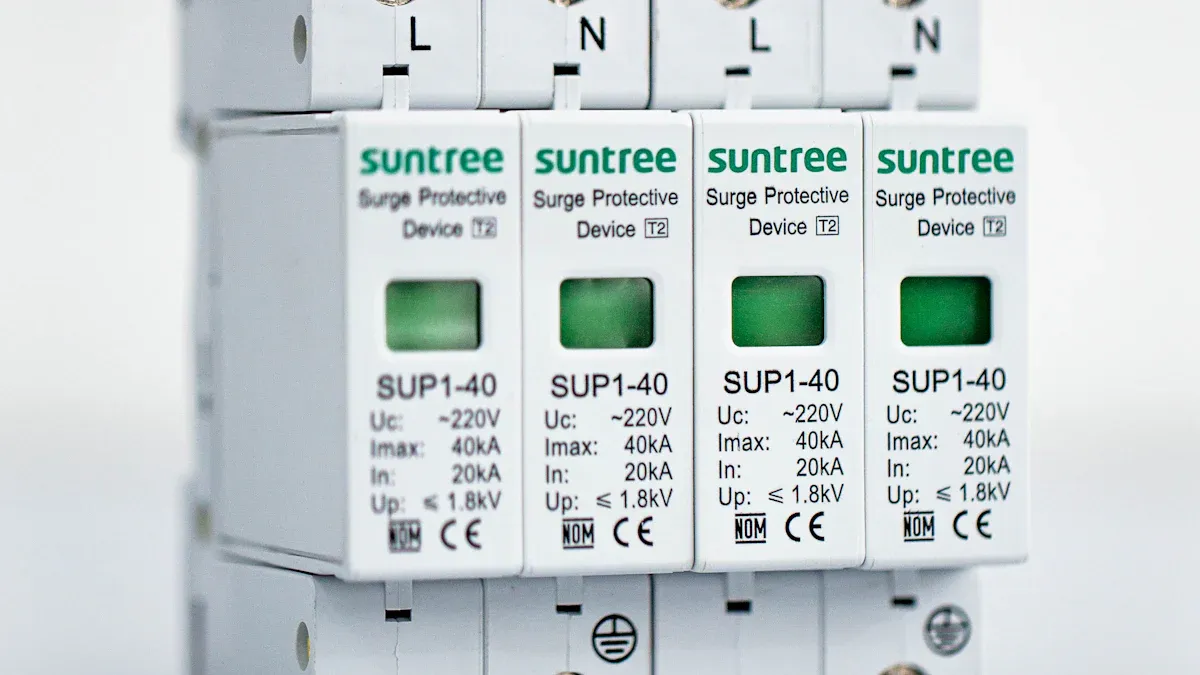
AC surge protection devices are engineered to defend against transient overvoltages in alternating current systems. These devices are crucial for traditional home wiring and commercial installations. The design of ac surge protective devices leverages the natural properties of ac waveforms to enhance protection and reliability.
AC spd units typically operate within a voltage range of 115V to 600V. This range aligns with standard residential and commercial power supplies. The alternating nature of ac allows for symmetrical voltage polarity, which simplifies the design of surge protection devices. HAIPART’s spd products for ac applications are rigorously tested to meet international standards such as IEC 61643-11 and UL 1449, ensuring consistent protection across a wide range of voltages.
The current in ac systems alternates direction, creating a sine wave pattern. This characteristic provides a natural advantage for ac surge protection. When a surge occurs, the current waveform crosses zero, which helps extinguish electrical arcs within the surge protective device. This zero-crossing effect allows ac surge protective devices to reset quickly after a surge event. HAIPART’s ac spd solutions utilize high-quality MOVs and GDTs optimized for ac waveforms, delivering reliable protection and long service life.
Aspect | AC Surge Protection Devices | DC Surge Protection Devices |
|---|---|---|
Voltage Ratings | Range from 115V to 600V | Range from 500V to 1500V |
Arc Extinguishing Mechanism | Arc naturally extinguishes at zero-crossing | Requires mechanical/thermal arc quenching due to lack of polarity reversal |
Waveform Characteristics | Designed for symmetrical voltage polarity and sine wave input | Built for polarity-sensitive circuits and unidirectional current flow |
Standards | IEC 61643-11, UL 1449 | EN 50539-11, IEC 61643-31, UL 1449 (PV, BESS, EV focus) |
DC surge protection devices are specifically designed for direct current systems, such as those found in solar power installations and battery storage. The continuous, unidirectional flow of dc current presents unique challenges for surge protection, requiring specialized design and components.
DC spd units must handle higher voltage ranges, typically from 500V to 1500V. These higher voltages are common in photovoltaic (PV) systems and battery energy storage solutions. Unlike ac, dc systems do not benefit from zero-crossing, so dc surge protection devices require robust arc suppression mechanisms. HAIPART’s dc spd products incorporate advanced thermal disconnects and longer creepage distances to ensure safe operation under continuous voltage stress.
System Voltage | Recommended Uc | Typical In Rating | Max Up Level | Application Standard |
|---|---|---|---|---|
600V DC | 800V | 20kA | 1.8kV | IEC 61643-31 |
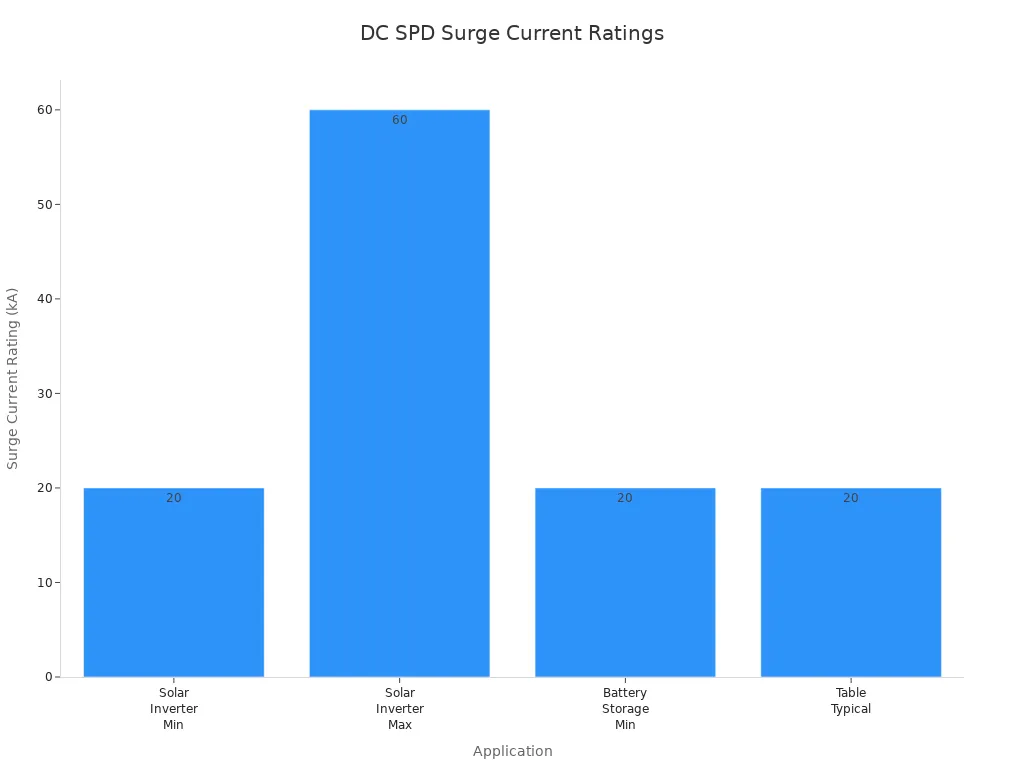
Surge current ratings for solar inverters often range from 20 kA to 60 kA, depending on system size and exposure to electrical surges. Battery storage systems require spd units rated for at least 20 kA to ensure reliable protection.
Response time is a critical factor in dc surge protection. DC surge protection devices are engineered to react within 25 nanoseconds or less, providing rapid diversion of surge currents. This fast response is essential because dc systems lack the natural arc interruption provided by zero-crossing in ac systems. HAIPART’s dc spd solutions utilize TVS diodes and advanced MOV arrangements to achieve ultra-fast response times, minimizing the risk of equipment damage.
Note: DC surge protection devices must be explicitly certified for dc use due to different failure modes and continuous voltage stress. Inadequate arc suppression can lead to thermal runaway and fire hazards, making proper selection and installation vital for safety.
AC surge protection devices benefit from zero-crossing, which simplifies arc suppression and enhances device longevity.
DC surge protection devices require more robust arc quenching mechanisms, such as thermal disconnectors and mechanical releases, to manage continuous current flow.
AC spd units are designed for symmetrical voltage polarity, while dc spd units are built for polarity-sensitive circuits and continuous voltage stress.
Surge protection devices for dc applications must respond faster to transients and handle higher voltage ratings, especially in renewable energy systems.
HAIPART’s expertise in both ac and dc surge protection ensures that every spd delivers optimal performance, reliability, and safety. The company’s commitment to quality and innovation makes its surge protective device solutions a trusted choice for modern homes and advanced energy systems.
AC surge protection devices play a critical role in homes with conventional wiring. Many residences rely on alternating current for lighting, appliances, and electronics. Risks such as exposed wires and voltage spikes can lead to equipment failure or even fires, especially during power interruptions. Surge protection devices help prevent these hazards by absorbing excess voltage and diverting it safely away from sensitive electronics. This reduces the risk of electrocution and fire, while also extending the lifespan of household devices. HAIPART’s SPD solutions for AC systems are engineered to meet international standards, ensuring reliable protection for traditional home wiring. Their robust construction and advanced components, such as metal oxide varistors and gas discharge tubes, provide consistent performance in a wide range of residential environments.
The adoption of solar power systems in homes has increased the need for specialized dc surge protection. Direct current from solar panels and battery storage systems presents unique challenges, including higher operating voltages and continuous current flow. DC surge protection devices are essential for safeguarding solar panels, inverters, and battery banks from voltage surges caused by lightning or grid fluctuations. These devices:
Shield sensitive components from damage due to external surges.
Maintain stable voltage levels, ensuring uninterrupted operation of solar equipment.
Increase the reliability and longevity of the entire solar power system by minimizing wear and tear.
HAIPART’s dc surge protective devices are designed to respond rapidly to transient events, using advanced MOVs and TVS diodes. Their products support a wide range of dc voltages, making them suitable for both rooftop solar installations and larger battery energy storage systems. Proper selection and installation of dc surge protection ensures that renewable energy investments remain safe and efficient.
Modern homes often combine ac and dc circuits, especially when integrating solar panels, battery storage, and traditional electrical loads. Hybrid installations require surge protection solutions that can manage both types of current. Hybrid SPDs, when properly rated and installed, effectively protect both ac and dc circuits. The combination of MOVs and GDTs in these devices allows them to handle surge currents in mixed environments. Effective installation practices, such as minimizing lead lengths and ensuring correct polarity in dc circuits, are essential for maintaining the protection provided by hybrid SPDs. Regular inspections and timely replacement after surge events help ensure ongoing safety. HAIPART offers hybrid SPD solutions tailored for residential settings with mixed ac and dc loads, supporting the transition to more advanced and energy-efficient home systems.
Surge protection is essential for maintaining the safety and reliability of residential electrical systems. Homes equipped with spd devices experience a significant reduction in equipment failure rates—up to 60%. This improvement results from the ability of spd units to divert dangerous voltage spikes away from sensitive electronics and appliances. Both ac and dc systems benefit from proper surge protection, but each requires a device tailored to its unique electrical characteristics. Using the correct spd for each application ensures that protection is both effective and long-lasting. Homeowners who invest in quality surge protection can expect fewer equipment replacements and lower maintenance costs over time.
Regular maintenance and monitoring are critical for the ongoing reliability of surge protection devices. The requirements for ac and dc spd units differ due to the nature of the electrical current and the methods used for arc extinguishing. The following table highlights key differences:
Parameter | AC SPD | DC SPD |
|---|---|---|
Arc Extinguishing | Natural zero-crossing aids arc interruption | No zero-crossing; requires fast thermal disconnector, arc chamber, or GDT |
Applications | Homes, offices, industrial control panels, building distribution boards | Solar PV arrays, battery storage, EV charging, telecom, wind turbines |
AC spd units often require less frequent inspection because the alternating current naturally interrupts arcs. DC spd units, used in solar and battery systems, need more regular checks to ensure that arc suppression mechanisms remain effective. Monitoring features, such as status indicators, help users quickly identify when a device needs attention or replacement.
HAIPART integrates advanced core components into every spd to maximize safety and reliability. These include Metal Oxide Varistors (MOVs) for rapid voltage clamping, Gas Discharge Tubes (GDTs) for high-current arc suppression, and TVS Diodes for ultra-fast response to transient surges. These technologies work together to provide robust protection for both ac and dc circuits.
HAIPART spd devices also feature auxiliary components that enhance user safety and system durability:
Voltage clamping diverts excess voltage safely to ground, protecting connected devices.
Extremely fast response time, reacting within nanoseconds to suppress surges before damage occurs.
Multiple protection modes cover Live-Neutral, Live-Ground, and Neutral-Ground connections.
Durable design withstands multiple surge events, with some models offering replaceable modules.
Status indicators, such as LED lights or alarms, provide real-time operational feedback.
The housing of each spd uses flame-retardant materials, ensuring safe operation in a variety of environments. By selecting the right spd for ac or dc applications, homeowners can achieve comprehensive surge protection and maintain the reliability of their electrical systems.
The surge protection industry is preparing for significant changes in international standards by 2026. Regulatory bodies are expected to update requirements to address the evolving needs of modern electrical systems. These changes will likely focus on integrating smarter monitoring features and predictive maintenance into surge protection devices. The rise of digital transformation and infrastructure resilience has pushed manufacturers to design spd solutions that support remote monitoring and real-time alerts. HAIPART remains committed to innovation and strict compliance with new standards. The company invests in research and development to ensure its ac and dc spd products meet or exceed the latest safety and performance benchmarks. This commitment helps customers maintain reliable protection as standards evolve.
Technological advancements are shaping the future of surge protection. By 2026, spd devices will incorporate smart features and advanced materials to improve performance and efficiency. The following table highlights key trends expected to influence the design and function of ac and dc spd solutions:
Trend | Description |
|---|---|
Smart SPD Integration | IoT technology enables real-time monitoring and instant alerts for enhanced operational safety. |
Renewable Energy Protection | Specialized spd devices protect solar and wind energy systems, supporting the growth of clean energy. |
Compact and Efficient Designs | Smaller, energy-efficient models fit modern living spaces and reduce energy consumption. |
Increased Focus on Data Centers | High-performance spd units protect critical infrastructure from electrical surges. |
Consumer Education | Greater awareness drives more homeowners to invest in surge protection for their properties. |
HAIPART leverages these innovations to deliver advanced ac and dc spd products. The integration of IoT and nanomaterials allows for faster response times and improved durability. These features ensure that both residential and commercial users receive the highest level of protection.
Market trends indicate a growing preference for dc surge protection devices, especially in renewable energy and high-voltage applications. Several factors drive this shift:
The renewable energy sector, particularly solar power installations, is the fastest-growing segment for surge protection.
Dc spd devices are essential for safeguarding home appliances and solar installations from power fluctuations.
Electric vehicle charging stations require robust dc surge protection due to their sensitivity to voltage surges.
Stricter safety codes and regulations encourage the use of certified surge protection in residential settings.
The expansion of smart-home ecosystems and increased home electrification boost demand for both ac and dc spd solutions.
The dc spd market is projected to grow at a compound annual growth rate of over 12% from 2026 to 2033.
HAIPART recognizes these trends and continues to develop spd products that address the unique challenges of ac and dc systems. The company’s focus on quality, innovation, and customer needs positions it as a leader in the surge protection industry for years to come.
Selecting the right surge protection device starts with a clear assessment of your home’s electrical requirements. Homeowners should evaluate the number and type of electronic devices in their residence. Many surges originate from inside the home, often when large appliances cycle on or off. Protecting your home’s infrastructure, including wiring and outlets, is essential for preventing damage during unexpected surges. Layering surge protection provides additional security for sensitive electronics, reducing the risk of costly repairs. Quality remains a top priority. Choosing high-quality spd devices ensures reliable performance and avoids inadequate protection.
Evaluate your electrical needs based on the number of devices and their power requirements.
Recognize that interior power surges often result from appliance activity.
Safeguard your home’s wiring and outlets with appropriate protection.
Implement layered surge protection for sensitive electronics.
Select spd devices that meet high standards for quality and reliability.
Understanding the differences between ac and dc spd devices is crucial for making an informed decision. AC spd units are designed for traditional wiring and appliances, while dc spd devices protect solar panels, battery storage, and other renewable energy systems. The correct ac or dc spd must match the electrical characteristics of your installation. AC systems benefit from natural arc suppression, which increases device longevity. DC systems require faster response times and robust arc quenching mechanisms due to continuous current flow. The following table summarizes key considerations:
Criteria | AC SPD | DC SPD |
|---|---|---|
Application | Traditional wiring, appliances | Solar panels, batteries |
Arc Suppression | Natural zero-crossing | Mechanical/thermal mechanisms |
Response Time | Standard | Ultra-fast |
Voltage Range | 115V–600V | 500V–1500V |
Careful comparison helps homeowners select the spd that best fits their protection needs.
HAIPART offers tailored solutions for surge protection, ensuring every home receives optimal coverage. The company conducts site-specific assessments to identify unique risks and requirements. Custom configurations are available for residential environments with specialized needs. HAIPART integrates spd devices seamlessly with existing electrical systems, supporting both ac and dc installations. Retrofit solutions address older facilities, bringing them up to modern safety standards. Homeowners benefit from OEM and ODM services, allowing for personalized protection strategies. HAIPART guarantees fast delivery, high-quality products, and a five-year warranty for peace of mind.
Tip: Consult HAIPART’s experts to determine the best spd solution for your home. Professional guidance ensures the right device is installed for maximum protection.
Choosing the right spd involves evaluating your home’s needs, comparing device options, and leveraging HAIPART’s custom services. This approach delivers reliable protection for both ac and dc systems, safeguarding your property and electronics.
AC surge protection devices are built for alternating current systems with zero-crossing waveforms, making arc suppression easier and enhancing safety.
DC SPDs are engineered for constant voltage systems, using specialized components to manage continuous voltage stress and ensure reliable arc extinction.
Selecting the correct SPD type is essential for effective protection and compliance with safety standards. HAIPART’s advanced solutions deliver rapid response, modularity, and broad compatibility for modern homes. Stay informed about industry trends and consult certified professionals for optimal surge protection. For more information, visit HAIPART’s official website.
AC SPD protects alternating current systems, while DC SPD safeguards direct current circuits. Each device is engineered for specific voltage and current characteristics. Using the correct type ensures optimal surge protection and system safety.
No. AC SPDs are not designed for the continuous voltage and unidirectional current of DC systems. Always select a DC SPD for solar panels, battery storage, or other direct current applications.
Install AC SPDs at the main distribution panel. Place DC SPDs near solar inverters or battery storage units. Proper placement maximizes protection for all connected equipment.
SPDs should be inspected annually. Replace the device after a major surge event or if the status indicator signals a fault. Regular checks ensure ongoing protection.
Component | Function |
|---|---|
MOV | Absorbs surge energy |
GDT | Suppresses high-current arcs |
TVS Diode | Provides ultra-fast response |
These components work together for reliable surge protection.
Yes. HAIPART offers DC SPDs specifically designed for solar installations. These devices handle high voltages and provide rapid response to protect solar panels and inverters.
Absolutely. HAIPART provides OEM and ODM services. Custom solutions are available for unique residential or commercial requirements. Contact HAIPART for tailored surge protection.
Most HAIPART SPDs feature status indicators, such as LED lights. A green light means normal operation. A red or off light signals the need for replacement or maintenance.