Views: 0 Author: Site Editor Publish Time: 2026-08-11 Origin: Site
Electrical infrastructure reliability hinges entirely on the microscopic integrity of its internal parts. A circuit breaker is only as dependable as its weakest internal mechanism. Micro-level material failures quickly escalate into macro-level catastrophic events, including severe arc flashes, electrical fires, and extensive unplanned downtime. Modern procurement teams face a significant challenge when sourcing these critical parts. Balancing strict safety standards with operational efficiency in a fragmented, globalized supply chain requires looking past marketing claims to verify actual manufacturing capabilities.
Selecting a reliable partner demands a systematic, evidence-based evaluation framework. Facility audits must focus heavily on metallurgical expertise, stringent quality assurance protocols, and robust supply chain resilience. Understanding how a manufacturer handles raw material sourcing, precision machining, and non-destructive testing separates capable engineering partners from high-risk suppliers.
Material Competence is Non-Negotiable: The reliability of circuit breaker components relies heavily on precise metallurgical formulations (e.g., contact alloys, bimetallic strips) and strict raw material sourcing.
Certifications Dictate Viability: A viable manufacturing partner must possess and maintain verifiable compliance with international standards (UL, IEC, ANSI, ISO 9001) alongside environmental mandates (RoHS, REACH).
Traceability Mitigates Risk: End-to-end component traceability—from raw material ingots to final assembly—is critical for managing recalls, liability, and quality audits.
Table of Contents
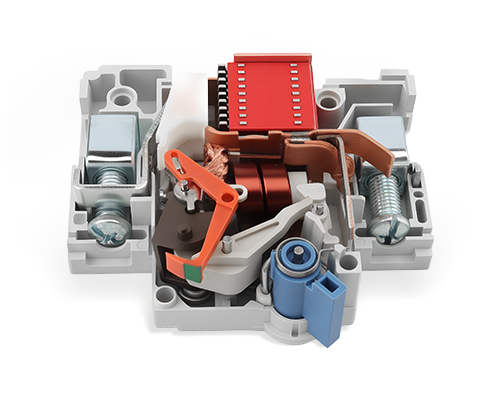
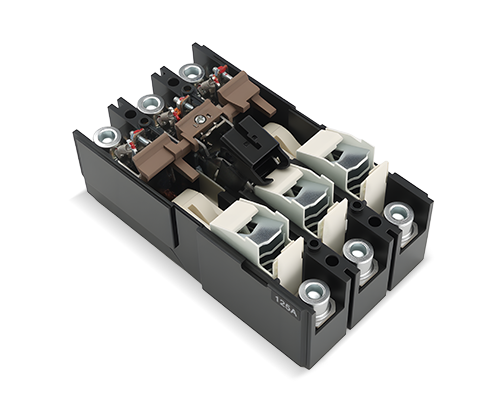
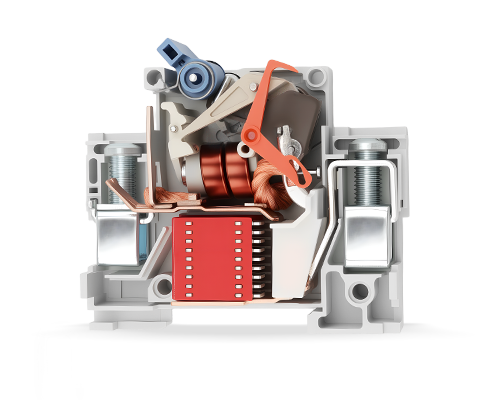
Internal mechanisms dictate the success or failure of electrical protection systems. Operational expectations for these parts are incredibly high, requiring exact tolerances and robust material properties. When you specify Circuit Breaker Components, you are essentially dictating the safety margins of the entire electrical panel.
To understand the stakes, we must break down the operational expectations of the primary internal mechanisms. Each part operates under extreme stress during a fault condition, and failure in one area cascades through the entire assembly.
Arc Chutes: These structures must withstand extreme thermal shock. They are responsible for quickly splitting, cooling, and extinguishing electrical arcs generated during fault interruptions. The materials used must resist outgassing and structural degradation under plasma-level temperatures.
Operating Mechanisms: Mechanical endurance is paramount. These assemblies require precise tolerances and absolute resistance to binding or metal fatigue over thousands of rapid open-close cycles. A sluggish mechanism increases clearing time, which directly increases incident energy during an arc fault.
Trip Coils & Solenoids: Electromagnetic components must deliver rapid, highly repeatable force under severe fault conditions to initiate the tripping sequence. Insulation breakdown or mechanical jamming here renders the breaker useless.
Contacts & Bimetallic Strips: Overload protection depends entirely on exact thermal conductivity and highly predictable thermal expansion rates. The bimetal must deflect at a precise rate corresponding to the overcurrent curve, while contacts must carry continuous current without excessive temperature rise.
Choosing an unverified supplier introduces cascading risks. Substandard manufacturing leads directly to component degradation, contact welding, and premature mechanical failure. The resulting product recalls, warranty claims, and regulatory penalties severely damage brand reputation and operational stability. Furthermore, field failures of safety devices often result in litigation and severe regulatory scrutiny.
Alloy selection for electrical contacts determines the lifespan and safety of the breaker. Manufacturers must demonstrate deep expertise in formulating and processing materials like silver-tin oxide, silver-tungsten, and silver-nickel. Environmental regulations have forced a transition away from legacy silver-cadmium oxide. Evaluating a supplier involves verifying their ability to produce compliant, high-performance cadmium-free alternatives without sacrificing arc-erosion resistance.
Structural integrity under intense thermal stress relies on advanced manufacturing techniques. Suppliers must excel in powder metallurgy, vacuum brazing, and the precise bonding of bimetallic sheets. These processes prevent delamination and ensure consistent electrical conductivity. Poor brazing leads to high contact resistance, which generates heat and eventually causes the breaker to fail thermally.
Contact Material | Primary Characteristics | Common Applications |
|---|---|---|
Silver-Tin Oxide (AgSnO2) | Excellent anti-welding properties, environmentally compliant, high thermal stability | Main contacts in molded case breakers, contactors |
Silver-Tungsten (AgW) | High resistance to arc erosion and mechanical wear, handles high inrush currents | Arcing contacts, high-current applications, air circuit breakers |
Silver-Nickel (AgNi) | Good electrical conductivity, stable contact resistance, low material transfer | Auxiliary switches, lower current ratings, control relays |
Copper-Tungsten (CuW) | Exceptional arc resistance, lower cost than silver alloys, requires higher contact pressure | Medium voltage breakers, heavy-duty switchgear |
Meeting sub-millimeter tolerances requires advanced machinery. High-tolerance stamping, progressive die pressing, and high-speed CNC machining are mandatory for producing reliable Circuit Breaker Components. The operating mechanism relies on linkages and latches that must engage and disengage with minimal friction. Any burrs, dimensional variations, or surface finish defects will alter the tripping characteristics.
In-house tooling design and fabrication capabilities provide a significant advantage. Manufacturers controlling their own tooling can reduce lead times, protect proprietary designs, and guarantee strict dimensional consistency across multi-million part production runs. When a supplier outsources their die maintenance, you often see a gradual drift in part dimensions as the tooling wears down, leading to assembly issues on your production line.
Mandatory quality certifications form the baseline of any supplier evaluation. Facilities must hold ISO 9001 for Quality Management and ISO 14001 for Environmental Management. Product-level compliance requires strict adherence to standards such as UL 489, IEC 60947-2, and CE marking compatibility. A supplier must understand these standards deeply, as the components they manufacture directly dictate whether your final assembly passes UL or IEC type testing.
Global environmental and ethical standards require rigorous auditing. Manufacturers must prove compliance with RoHS and REACH directives. Furthermore, Conflict Minerals compliance ensures the ethical sourcing of critical elements like tungsten, gold, tin, and tantalum. You must verify that the tungsten used in your arcing contacts does not originate from conflict zones, protecting your supply chain from severe ethical and legal liabilities.
Modern quality assurance relies heavily on Non-Destructive Testing. Manufacturers utilize Automated Optical Inspection, X-ray inspection, and ultrasonic testing to detect subsurface micro-cracks, voids, or porosity in molded, brazed, or machined parts. A void in a brazed joint between a silver contact pad and a copper carrier will create a localized hot spot, leading to premature failure.
High-precision dimensional verification is achieved using Coordinate Measuring Machines and 3D laser scanners. These tools ensure every part matches the engineering drawing perfectly. Statistical process control data derived from these measurements should be readily available for your review during a facility audit.
A reliable partner maintains comprehensive in-house laboratory capabilities. Relying solely on third-party labs slows down production and indicates a lack of internal quality culture. Critical testing protocols include:
Contact Resistance Testing: Micro-ohmmeter verification ensures minimal power dissipation and heat generation across mated contacts. This is usually measured in micro-ohms at a specified test current.
Temperature Rise Testing: Assesses thermal performance and material stability under continuous rated current. The components must not exceed the temperature limits specified by UL or IEC standards.
Mechanical Lifecycle Fatigue Testing: Simulates thousands of open-close-open sequences to verify mechanism endurance. This identifies weak points in springs, latches, and pivot pins.
Salt Spray & Environmental Testing: Evaluates corrosion resistance for parts deployed in harsh industrial or marine environments, typically following ASTM B117 protocols.
Dielectric Withstand Testing: Verifies the insulation properties of molded plastic components and arc chute assemblies to ensure they prevent flashovers.
End-to-end traceability is vital for root cause analysis and liability mitigation. Manufacturers must implement strict lot control, barcoding, and seamless ERP integration. Direct Part Marking, such as laser-etched 2D data matrix codes on individual copper or bimetallic parts, allows engineers to trace any field failure directly back to the specific batch of raw material, the exact manufacturing date, and the machine operator.
If a batch of bimetal strip exhibits incorrect deflection characteristics in the field, robust traceability allows you to quarantine the specific affected serial numbers rather than issuing a massive, costly general recall. This level of control separates top-tier manufacturers from average machine shops.
Evaluating how a manufacturer handles sudden demand surges reveals their true operational maturity. Reviewing machine utilization rates, shift flexibility, and buffer stock policies is essential. Maintaining adequate buffer stocks of key raw materials, especially precious metals like silver and specialized copper alloys, prevents production bottlenecks during global shortages.
You should request data on their On-Time Delivery performance over the past 24 months. A supplier running their stamping presses at 95% capacity has no room to absorb your emergency orders or recover from a machine breakdown. Look for partners who maintain strategic excess capacity and cross-train their workforce.
Relying on single-region manufacturing introduces unacceptable risk. Evaluate suppliers based on their geographic footprint and nearshoring capabilities. Dual-sourcing of raw materials is necessary to mitigate commodity volatility and protect production schedules from localized disruptions.
Ask potential partners about their tier-two suppliers. If your component manufacturer relies on a single source for their silver powder or specialized plastics, your supply chain is vulnerable. Robust manufacturers actively manage their own supply chains, qualifying multiple vendors for every critical raw material.
Transitioning from prototype to mass production is a common bottleneck. A structured Production Part Approval Process submission is necessary to guarantee long-term consistency. Level 3 PPAP is preferred, requiring comprehensive documentation including Failure Mode and Effects Analysis, Control Plans, and Process Capability Studies.
The PPAP process forces the manufacturer to prove that their production process can consistently meet your specifications at the quoted run rate. Pay close attention to their Cpk and Ppk metrics. A Cpk of 1.33 or higher indicates a capable, well-controlled process that will yield minimal defects.
Outsourcing proprietary designs carries inherent risks of intellectual property theft. Trustworthy manufacturers offer robust legal and operational safeguards. These include compartmentalized production zones, highly secure file transfer protocols, and uncompromising Non-Disclosure Agreement enforcement.
When touring a facility, observe their physical security. Are blueprints left out on workbenches? Are visitors allowed to take photos? A manufacturer that takes your IP seriously will have strict protocols governing who can access your CAD files and tooling.
Design revisions are inevitable. A reliable partner demonstrates agility in handling Engineering Change Orders. They must utilize a documented, error-proof process for implementing revisions without disrupting ongoing production, creating excess obsolete inventory, or accidentally introducing legacy defects into new batches.
The ECO process should include a hard cutoff date, clear identification of revised parts, and quarantine procedures for old revisions. Poor ECO management leads to mixed stock on your assembly line, which can cause catastrophic failures if incompatible components are mated together.
Selecting a manufacturer for Circuit Breaker Components is a strategic engineering decision. As a trusted leader in low-voltage electrical protection and custom component manufacturing, Wenzhou Zhonghui Electric delivers precision-engineered solutions backed by rigorous quality assurance and international compliance. Verify certifications first, audit quality control and material science capabilities second, and assess supply chain scalability third. Take the following actions to secure a reliable partner:
Draft a comprehensive Request for Information focused specifically on in-house testing capabilities and metallurgical expertise.
Schedule an on-site facility audit to inspect tooling maintenance, NDT equipment, and physical IP security measures.
Request a pilot run of First Article components to validate dimensional accuracy, material composition, and surface finish.
Establish clear Level 3 PPAP requirements and acceptable Cpk thresholds before finalizing any long-term supply agreements.
A: The most critical parts include electrical contacts, bimetallic strips, arc chutes, and precision operating mechanisms. These elements directly handle fault currents, thermal overloads, and the mechanical forces required to safely interrupt power.
A: A reputable manufacturer must hold ISO 9001 and ISO 14001 certifications. They should also demonstrate strict compliance with RoHS and REACH directives, and possess deep familiarity with UL 489 and IEC 60947-2 standards.
A: Reliability testing includes mechanical endurance cycling, temperature rise evaluations under load, micro-ohm contact resistance measurements, and salt spray corrosion testing to simulate harsh environmental conditions over time.
A: Realistic timelines vary based on complexity but generally require 8 to 12 weeks. This factors in custom tooling development, initial prototyping, First Article Inspection approval, and comprehensive PPAP submission.
A: Material selection directly dictates electrical conductivity, arc-erosion resistance, anti-welding properties, and thermal expansion compatibility. Incorrect alloys lead to rapid degradation, overheating, and catastrophic failure during fault conditions.
A: Traceability enables precise root cause analysis during field failures. It is essential for targeted recall management, proving regulatory compliance, and mitigating severe legal liabilities associated with electrical safety incidents.
A: The Production Part Approval Process validates that a supplier can consistently meet design specifications. Level 3 is preferred because it requires complete documentation, including design records, process capability studies, and initial sample inspection reports.