
Views: 0 Author: Site Editor Publish Time: 2026-01-26 Origin: Site
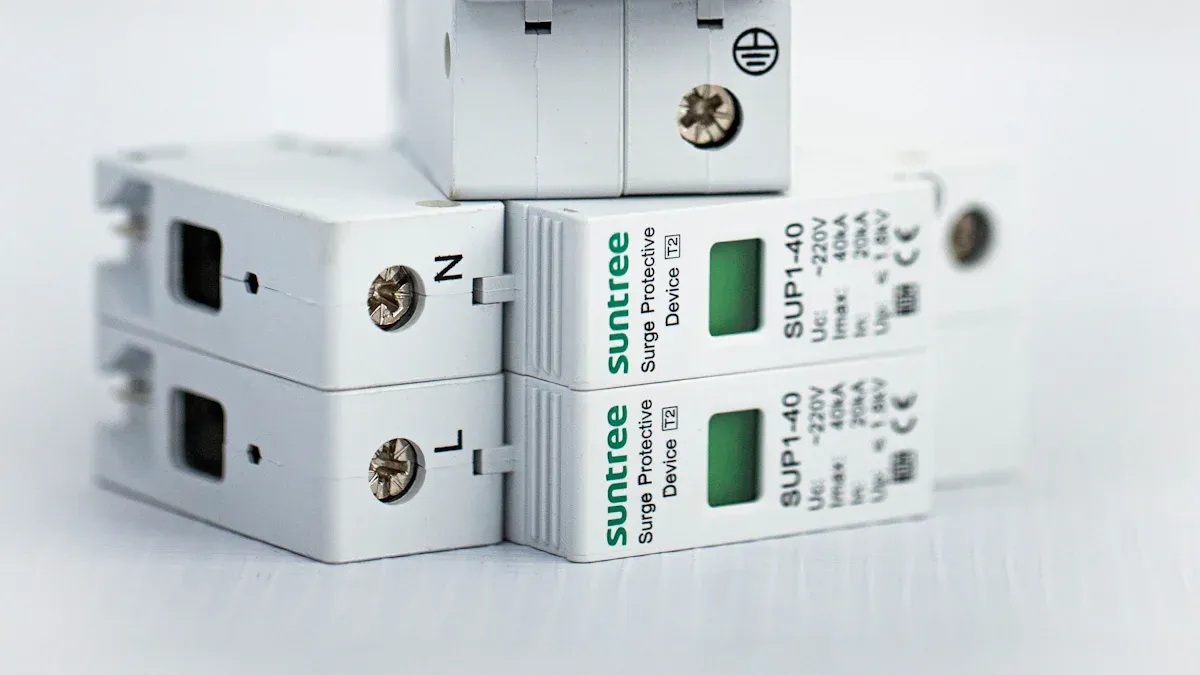
When you consider Miniature Circuit Breaker (MCB): Definition, selecting the right type in 2026 means you prioritize safety, efficiency, and compliance. You see rapid growth in Type B MCBs, while hydraulic-magnetic models gain momentum in the market. Understanding the differences helps you prevent electrical hazards and meet stringent safety standards. You rely on HAIPART for high-quality Miniature Circuit Breaker Parts that support your commitment to safety. Make informed choices that protect your electrical systems and ensure lasting reliability.
Miniature Circuit Breakers (MCBs) protect circuits from overloads and short circuits, ensuring safety and reliability.
Type B MCBs are ideal for residential settings, offering fast response to minor surges in lighting and appliance circuits.
Type C MCBs suit commercial environments, handling moderate inrush currents from devices like motors and lighting systems.
Type D MCBs are designed for industrial use, accommodating high inrush currents from heavy machinery and equipment.
Selecting the right MCB involves considering the circuit's voltage, load, and environment to ensure optimal protection.
Smart MCBs in 2026 offer advanced features like AI integration and IoT connectivity for real-time monitoring and control.
Energy-efficient MCBs reduce power loss and improve system performance, supporting sustainability goals.
Regular inspection and maintenance of MCBs ensure ongoing protection and prevent unexpected outages.
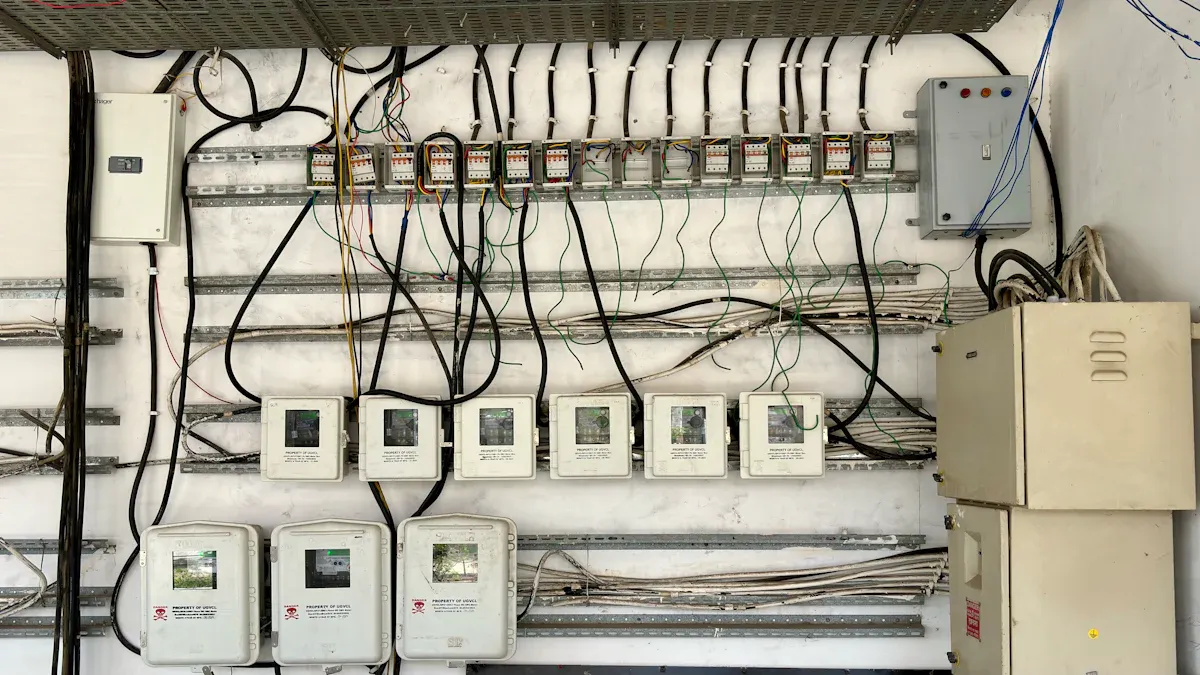
You encounter the term miniature circuit breaker (mcb): definition in every modern electrical installation. A miniature circuit breaker protects your circuits from overloads and short circuits. It acts as an automatic switch that interrupts the flow of electricity when it detects a fault. You find miniature circuit breakers in homes, offices, and industrial settings, where they ensure the safety and reliability of electrical systems.
HAIPART stands out in the field of miniature circuit breaker parts. The company’s commitment to quality and innovation means you receive components that meet the highest industry standards. When you choose HAIPART, you benefit from advanced manufacturing, precise assembly, and rigorous quality control.
You should also know that international electrical codes define the miniature circuit breaker (mcb): definition with clear specifications. The table below summarizes the main standards:
| Standard | Description |
|---|---|
| IEC 60947-2 | Governs circuit breakers for industrial applications, safeguarding electrical power distribution up to 1000 Volts AC and 1500 Volts DC. |
| IEC 60898-1 | Refers to AC low-voltage circuit breakers for households, with rated currents from a few amps to 125A and a maximum short-circuit capacity of 25kA. |
You may wonder, how does a miniature circuit breaker work? The answer lies in its internal mechanisms and components. The function of an mcb centers on detecting abnormal electrical conditions and responding instantly. When you look inside an mcb, you find several key parts working together:
Thermal element: Detects overload conditions and trips the circuit when current exceeds rated capacity.
Magnetic element: Responds quickly to short circuits, tripping the circuit immediately during current surges.
Contacts: Complete the circuit when closed and interrupt it when the breaker trips.
Operating mechanism: Ensures the breaker trips and resets after a fault is cleared.
Arc extinguishing chamber: Cools and suppresses the arc formed when the circuit is broken.
Housing: Protects internal components from environmental factors and mechanical damage.
Terminal connectors: Connect the mcb to the electrical system, allowing current flow.
You see that the function of an mcb is not limited to just breaking the circuit. It also includes monitoring current flow, detecting faults, and allowing manual resetting. When you ask how mcbs work, you discover that they combine thermal and magnetic protection for comprehensive safety. The specifications of each mcb, such as rated current and breaking capacity, determine its suitability for different applications.
You need to understand the miniature circuit breaker (mcb): definition and the different types available. The function of an mcb depends on its trip characteristics and application. There are six basic types of mcbs: Z, K, D, C, B, and A. Each type responds differently to electrical surges and overloads. For example, Z-rated breakers require a surge almost 20 times the rated current to trip, while A-rated breakers trip at only two or three times the rated current.
Selecting the right mcb type ensures your electrical system remains safe and reliable. You must check if your line is AC or DC and follow safety protocols for your specific circuit. Understanding certifications such as UL 489 and UL 1077 helps you choose mcbs that meet safety and reliability requirements. The specifications of your mcb, including key specifications in mcbs like current rating and breaking capacity, play a crucial role in protecting your installation.
When you select the correct miniature circuit breaker, you protect your equipment, prevent hazards, and ensure compliance with modern standards. The right choice supports the integrity of your entire electrical system.
Understanding mcb types and their trip curves is essential for selecting the right protection for your electrical systems. Each type responds differently to overloads and short circuits, making it vital to match the mcb to your specific application. This detailed breakdown of mcb types will help you make informed decisions for 2026 and beyond.
You will find that Type B mcb types are among the most sensitive options available. These miniature circuit breakers trip when the current reaches 2 to 3 times the rated value. This sensitivity ensures rapid response to minor surges, providing excellent protection for circuits with resistive loads. The mcb trip curve types for Type B breakers make them ideal for environments where you want to minimize the risk of nuisance tripping while still ensuring safety.
Trips at 2-3 times the rated current
Fast response to overloads and short circuits
Designed for low inrush current circuits
Compatible with HAIPART Miniature Circuit Breaker Parts for reliable performance
You will most often use Type B mcb types in residential settings. These breakers protect household appliances, lighting circuits, and other purely resistive loads. As urban development increases, the demand for Type B miniature circuit breakers continues to rise. You benefit from enhanced safety and compliance with modern electrical standards when you choose this type.
Common in household distribution boxes
Ideal for domestic appliances and lighting
Preferred for purely resistive loads
Increasingly adopted due to growing safety awareness and regulatory compliance
Type C mcb types offer a balanced approach between sensitivity and tolerance for inrush currents. These breakers trip at 5 to 10 times the rated current, making them suitable for circuits with moderate surges. You can rely on Type C miniature circuit breakers to protect distribution lines and lighting circuits that serve larger current connections. HAIPART’s advanced components ensure consistent performance and durability in these applications.
| Type | Tripping Characteristics | Common Applications |
|---|---|---|
| C | Trips at 5-10 times the rated current, within 0.1 seconds | Protecting distribution lines and lighting circuits with larger current connections |
You will typically install Type C mcb types in commercial and light industrial environments. These breakers handle the higher inrush currents from devices like fluorescent lighting, small motors, and air conditioning units. When you need reliable protection for circuits with mixed loads, Type C mcb types deliver the right balance of safety and performance.
Used in commercial buildings and offices
Suitable for circuits with moderate inrush currents
Protects lighting circuits, small motors, and HVAC systems
Ensures compliance with evolving electrical codes
Type D mcb types are designed for circuits with very high inrush currents. These breakers trip at 10 to 20 times the rated current, providing delayed tripping to accommodate the startup surges of heavy machinery. You can trust Type D miniature circuit breakers to protect equipment in demanding industrial environments. HAIPART’s robust construction and high-quality materials support the reliability required for these applications.
| Industry | Application Description |
|---|---|
| Industrial | Used in heavy machinery like cranes and elevators. |
| Industrial | Suitable for industrial mixers and compressors. |
| Welding | Employed in welding equipment circuits due to high inrush. |
| General | Delayed tripping tolerates extreme startup surges. |
You will find Type D mcb types in industries where equipment generates significant startup currents. These breakers are essential for protecting large motors, compressors, pumps, and welding machines. When you work with heavy-duty electrical systems, Type D mcb types ensure both safety and operational continuity.
Common in factories and manufacturing plants
Protects heavy machinery, cranes, and elevators
Ideal for circuits with industrial mixers, compressors, and pumps
Used in welding equipment and other high-inrush applications
By understanding these mcb types and their trip curves, you can select the right miniature circuit breaker for your needs. HAIPART’s Miniature Circuit Breaker Parts provide the quality and reliability you require for every application.
You encounter Type K MCBs when you need to protect circuits with significant inductive loads. These breakers trip at 8 to 12 times the rated current. This higher threshold allows them to handle the strong inrush currents that occur when heavy machinery starts. You benefit from the following characteristics:
Trips at 8–12 times the rated current
Designed for circuits with large inductive loads
Withstands high inrush currents without nuisance tripping
Compatible with HAIPART Miniature Circuit Breaker Parts for robust performance
You use Type K MCBs in industries where machinery and large motors operate. These breakers protect heavy-duty motors, transformers, and industrial equipment. You see them in manufacturing plants, workshops, and facilities with conveyor systems. When you install Type K MCBs, you ensure reliable protection for equipment that experiences frequent or intense startup surges.
Tip: Choose Type K MCBs for applications where standard breakers might trip unnecessarily due to high inrush currents.
You select Type Z MCBs when you need precise protection for sensitive equipment. These breakers have a low trip threshold, set at 2 to 3 times the rated current. This design allows them to respond quickly to even minor overcurrents. You rely on Type Z MCBs to safeguard delicate electronics, semiconductors, and control circuits. Their fast action prevents damage to components that cannot tolerate electrical fluctuations.
You find Type Z MCBs in laboratories, data centers, and environments with advanced electronic devices. These breakers protect medical equipment, measurement instruments, and automation systems. When you use Type Z MCBs, you minimize the risk of downtime and costly repairs for sensitive installations. HAIPART’s precision-engineered parts ensure consistent performance in these critical applications.
You recognize Type A MCBs as a modern solution for comprehensive circuit protection. These breakers combine advanced safety features with user-friendly operation. You benefit from their ability to disconnect circuits automatically during faults, reducing fire risks and equipment damage. Type A MCBs offer a resettable mechanism, which saves you time and maintenance costs. Their design supports sustainability by reducing the need for disposable fuses.
| Advantage | Description |
|---|---|
| Enhanced Safety | Automatically disconnects the circuit during faults, reducing the risk of electrical fires and damage. |
| Cost-effective | Higher initial cost but saves on replacement and maintenance due to its resettable nature. |
| Easy to use | Simple reset mechanism allows quick restoration of power, minimizing downtime in commercial settings. |
| Environmental impact | Reduces the need for disposable fuses, promoting sustainability through long life and reusability. |
You install Type A MCBs in modern residential, commercial, and industrial settings. These breakers suit smart homes, office buildings, and facilities focused on energy efficiency. You also find them in renewable energy systems and electric vehicle charging stations. When you choose HAIPART’s Type A MCB components, you ensure your installation meets the latest safety and environmental standards.
Note: Type A MCBs help you future-proof your electrical systems while supporting sustainability goals.
When you select a miniature circuit breaker, you must consider the pole configuration. The number of poles determines how many conductors the breaker can protect and disconnect. Each configuration offers a unique level of protection for different electrical systems. The right choice ensures comprehensive protection against overload, short-circuit, and earth fault current protection.
| Pole Configuration | Description |
|---|---|
| SP (Single Pole) | Protects one single phase conductor. |
| DP (Double Pole) | Protects and switches both the phase conductor and the neutral conductor. |
| TP (Triple Pole) | Protects and switches three phase conductors (used in three-phase systems). |
You use a single pole miniature circuit breaker to protect one phase conductor in a circuit. This configuration is common in residential and light commercial applications. It provides overload protection and protection against short-circuit for individual circuits, such as lighting or small appliances. When you install an SP breaker, you ensure that a fault in one circuit does not affect others.
Typical applications for single pole breakers in 2026 include:
Motor control circuits
HVAC equipment
Protection for programmable logical controllers (PLCs)
Protection for distributed control systems (DCS)
You benefit from simple installation and straightforward troubleshooting. HAIPART’s miniature circuit breaker parts adapt easily to SP configurations, giving you reliable protection for everyday electrical needs.
A double pole configuration, also known as a 2p mcb, protects both the phase and neutral conductors. You often use this setup in circuits that require higher safety standards, such as those supplying large appliances or subpanels. The DP breaker disconnects both wires simultaneously, providing enhanced protection against overload and over-current protection.
You gain several advantages with double pole miniature circuit breakers:
Reusable design saves you time and money.
Lower maintenance costs compared to traditional fuses.
Reliable operation with quick response to faults.
Automatic operation and easy reset after tripping.
Ability to identify faulty circuits quickly.
Tip: In commercial settings, DP breakers reduce total cost of ownership. Over five years, you spend less on equipment, maintenance, and fault-related losses compared to fuses.
HAIPART’s components support DP configurations, ensuring you meet modern safety and efficiency requirements.
Triple pole miniature circuit breakers protect all three phase conductors in a three-phase electrical system. You find this configuration essential in industrial environments where motors and large equipment operate. TP breakers provide simultaneous protection for all three phases, ensuring balanced operation and minimizing downtime.
Key benefits of triple pole breakers include:
Comprehensive protection for three-phase circuits.
Simultaneous interruption of all phases during overload or short-circuit events.
Efficient power distribution for motors and heavy equipment.
Space-saving design compared to using three separate single pole breakers.
When you choose HAIPART’s triple pole solutions, you enhance protection and reliability in demanding industrial settings. You also ensure compliance with strict electrical safety standards.
Note: Selecting the right pole configuration is crucial for effective overload protection and earth fault current protection. HAIPART’s miniature circuit breaker parts offer flexibility for SP, DP, TP, and even 4p mcb configurations, supporting a wide range of electrical applications.
You encounter Four Pole (4P) Miniature Circuit Breakers when you need comprehensive protection for three-phase systems with a neutral conductor. This configuration allows you to disconnect all three phases and the neutral simultaneously. You gain a higher level of safety, especially in complex electrical systems where balanced load and neutral integrity are critical.
You often use 4P MCBs in industrial, commercial, and renewable energy applications. These breakers protect equipment such as industrial motors, solar inverters, and large HVAC systems. You ensure that, during a fault, all conductors—including the neutral—are isolated, which prevents potential hazards from stray currents or unbalanced loads.
When you select a 4P MCB, you address the unique challenges of modern power distribution. You minimize the risk of equipment damage and electrical fires by ensuring complete circuit isolation.
You benefit from several key features when you choose Four Pole MCBs:
Protection for three-phase systems with neutral, ideal for factories, data centers, and solar farms.
High breaking capacity, often ranging from 15kA to 25kA, which suits environments with elevated fault risks.
Compliance with international standards such as IEC 60898-1, IEC 60947-2, and UL 489, ensuring suitability for global applications.
Durable construction, including silver-cadmium contacts and UV-stable housing, which extends the lifespan of the breaker.
Proven reliability, as demonstrated in a 10MW solar farm in Spain, where switching to high-quality 4P MCBs resulted in zero failures and significant cost savings over 18 months.
You see that 4P MCBs are not just about protection—they also support operational efficiency. You can perform maintenance safely, knowing that all conductors are isolated. This reduces downtime and enhances safety for your maintenance teams.
HAIPART’s Miniature Circuit Breaker Parts adapt seamlessly to 4P configurations. You can rely on HAIPART’s advanced manufacturing and quality control to deliver components that meet the demands of high-performance electrical systems. Whether you manage a commercial building, an industrial plant, or a renewable energy installation, you find that HAIPART’s solutions provide the flexibility and reliability you need.
Tip: When you design or upgrade complex electrical systems, always consider 4P MCBs for circuits where neutral disconnection is essential. This choice supports both safety and compliance with evolving industry standards.
You rely on miniature circuit breakers to protect your home’s electrical system from overcurrent and short circuits. Their compact design and cost-effectiveness make them the preferred choice for both single-phase and multi-phase wiring in modern homes. As urbanization accelerates and automated homes become more common, you see a growing demand for reliable circuit protection. The 20 to 40 Amps range is especially significant in residential settings, as it covers everything from basic lighting circuits to small machinery loads like water heaters and air conditioners.
When you install HAIPART Miniature Circuit Breaker Parts in your home, you ensure consistent performance and long-term safety. For example, you might use a single pole breaker for lighting circuits or a double pole breaker for kitchen appliances. In smart homes, you benefit from advanced features such as fast response to faults and easy manual reset, which help maintain uninterrupted power and protect sensitive electronics.
Tip: Always match the breaker’s amperage to the specific needs of each circuit to prevent nuisance tripping and ensure optimal protection.
In commercial facilities, you face more complex electrical demands. Office buildings, retail stores, and public spaces require robust protection for lighting, HVAC systems, and a variety of equipment. When selecting miniature circuit breakers for these environments, you should consider several key factors:
Ensure the short-circuit breaking capacity meets or exceeds the line’s capacity.
Set the MCB current below 80% of the short-circuit current at the circuit’s end.
Match the number of poles to the number of lines needing protection.
Choose a breaker with an amperage rating higher than the connected device and the maximum line amperage.
For motor protection, align the long-delay current with the motor’s rated current.
HAIPART’s components adapt to these requirements, offering flexibility for different pole configurations and amperage ratings. For example, you might use triple pole breakers for three-phase HVAC systems or double pole breakers for subpanels in a retail space. You gain peace of mind knowing your electrical infrastructure is protected by high-quality, reliable components.
You encounter the most demanding conditions in industrial environments. Factories, manufacturing plants, and warehouses require miniature circuit breakers that can handle high currents, frequent switching, and harsh operating conditions. You often need breakers with higher breaking capacities and specialized trip curves to protect heavy machinery, conveyor systems, and large motors.
When you choose HAIPART Miniature Circuit Breaker Parts for industrial applications, you benefit from advanced materials and precision engineering. For example, you might install four pole breakers to protect three-phase systems with a neutral conductor, ensuring complete isolation during maintenance. In automated production lines, you rely on fast-acting breakers to minimize downtime and prevent costly equipment damage.
Note: Regular inspection and maintenance of your breakers help maintain safety and operational efficiency in industrial settings.
You face unique challenges when you protect sensitive equipment. Devices such as medical instruments, laboratory analyzers, data servers, and advanced automation systems require precise and reliable circuit protection. Even a minor electrical surge or fault can cause costly downtime or permanent damage. You must choose Miniature Circuit Breakers (MCBs) that respond quickly and accurately to any abnormal condition.
You find that Type A and Type Z MCBs offer the best protection for delicate electronics. These breakers trip almost instantly when the current reaches two to three times the rated value. This fast action prevents harmful surges from reaching your equipment. You rely on these MCBs for circuits that power semiconductors, PLCs, sensitive sensors, and communication devices.
HAIPART Miniature Circuit Breaker Parts support your need for high-performance protection. The advanced design includes silver contacts for low resistance, a bimetallic strip for precise overload detection, and a leakage transformer for rapid response to current differences. You benefit from consistent quality and reliability, which is essential for critical applications.
When you select MCBs for sensitive equipment, you should consider several key factors:
Current and voltage ratings must match or exceed your circuit’s requirements.
The load type—resistive, inductive, or capacitive—determines the correct MCB curve.
The MCB’s breaking capacity should be higher than the maximum possible short-circuit current.
Environmental conditions, such as temperature and humidity, can affect breaker performance.
Compliance with local and international regulations ensures safety and legal operation.
Coordination with other protective devices in your system guarantees proper selectivity and avoids nuisance tripping.
You see practical examples in hospitals, where Type Z MCBs protect MRI machines and patient monitors. In research labs, you use Type A MCBs to safeguard analytical instruments and data acquisition systems. Data centers depend on these breakers to maintain uptime for servers and network infrastructure.
Tip: Always review your equipment’s technical specifications before selecting an MCB. This step ensures you match the breaker’s characteristics to the device’s needs, reducing the risk of malfunction or failure.
You trust HAIPART to deliver the right components for sensitive environments. The company’s commitment to quality and innovation means you receive MCB parts that meet the highest standards. You protect your investment and maintain operational continuity when you choose HAIPART for your sensitive equipment applications.
You see a new era for miniature circuit breaker technology as smart MCBs become standard in 2026. These advanced types transform how you manage and protect your electrical systems. You benefit from features that go far beyond traditional short-circuit protection. Smart MCBs use artificial intelligence and IoT connectivity to deliver real-time insights and control. You can monitor your circuits remotely, receive instant alerts, and even predict faults before they cause downtime.
Here is a summary of the latest advancements you will find in smart MCBs:
| Advancement Type | Description |
|---|---|
| AI Integration | Uses AI algorithms for predictive analytics, helping you detect faults early. |
| IoT Connectivity | Enables remote monitoring and control, giving you access to real-time data from anywhere. |
| Digital Circuit Protection Devices | Improves safety and efficiency with innovative digital features. |
| Predictive Maintenance Capabilities | Lets you schedule maintenance before issues escalate, reducing operational costs. |
| Advanced Monitoring Features | Offers diagnostic tools for better management of your electrical infrastructure. |
You can rely on HAIPART’s commitment to innovation. The company invests in R&D to bring you smart miniature circuit breaker types that set new industry benchmarks. You gain peace of mind knowing your electrical system is protected by the most advanced technology available.
You demand more from your electrical protection devices in 2026. Energy-efficient MCB types help you reduce power loss and improve overall system performance. These breakers use advanced materials and optimized designs to minimize heat generation during normal operation. You see lower energy bills and a smaller carbon footprint as a result.
You also benefit from features like low-resistance silver contacts and precision arc grids. These innovations ensure that your miniature circuit breaker responds instantly to short-circuit events while maintaining high efficiency. HAIPART leads the way by integrating energy-saving technologies into every product line. You can trust that your choice supports both safety and sustainability.
Tip: When you upgrade to energy-efficient MCB types, you not only protect your equipment from short-circuit risks but also contribute to a greener future.
You face stricter safety standards and tougher operating conditions in 2026. Enhanced safety features in modern MCB types address these challenges directly. You see several improvements that make your electrical installations safer and more reliable:
New safety standards for miniature circuit breaker and residual current circuit breaker types raise the bar for protection.
Smart technology and advanced materials increase resilience against short-circuit and overload events.
Tougher design specifications ensure your MCBs withstand harsh environments.
More rigorous testing protocols guarantee consistent performance and reliability.
Clear labeling helps you understand the capabilities of each breaker, making selection and maintenance easier.
You benefit from HAIPART’s focus on quality and safety. The company’s advanced R&D ensures that every miniature circuit breaker meets or exceeds the latest requirements. You can confidently install these types in any setting, knowing they will protect your electrical system from short-circuit hazards and other risks.
Note: Always choose MCB types with enhanced safety features for critical applications. This decision helps you prevent accidents and ensures compliance with evolving regulations.
You face a rapidly evolving regulatory landscape in 2026. Electrical safety standards continue to advance, driven by new technologies, increased energy demands, and a global push for sustainability. You must ensure that every Miniature Circuit Breaker (MCB) you select complies with the latest international and regional standards. This step protects your installations, guarantees insurance coverage, and avoids costly penalties.
You see several key standards shaping the MCB market in 2026:
| Standard | Focus Area | Importance for You |
|---|---|---|
| IEC 60898-1 | Low-voltage circuit breakers for household use | Ensures safety in residential settings |
| IEC 60947-2 | Circuit breakers for industrial applications | Guarantees reliability in factories and plants |
| UL 489 | North American safety for MCBs | Required for US and Canadian markets |
| GB/T 10963.1 | Chinese national standard for MCBs | Essential for projects in China |
You must check the product documentation and labeling for these certifications. HAIPART designs and manufactures MCB parts that meet or exceed these standards. You benefit from advanced testing protocols, including electronic inspection and automated quality checks. These processes ensure that every component delivers consistent performance and safety.
Note: Always verify the compliance markings on your MCBs before installation. This practice helps you avoid legal issues and ensures compatibility with other system components.
You also encounter new requirements in 2026. Many regions now demand higher breaking capacities, improved arc extinction, and enhanced leakage protection. You see stricter guidelines for environmental impact, such as RoHS and REACH compliance. These rules limit hazardous substances and promote eco-friendly manufacturing.
HAIPART stays ahead of these trends through continuous research and development. The company invests in intelligent assembly lines and advanced materials. You gain access to MCB parts that support green building certifications and future-proof your projects.
You should follow a simple checklist to ensure compliance:
Review the latest standards for your region and application.
Confirm that your MCBs carry the correct certifications.
Choose products with clear documentation and traceable quality records.
Work with suppliers like HAIPART who prioritize compliance and innovation.
You protect your reputation and your assets when you choose compliant MCBs. You also support a safer, more sustainable electrical industry. Trust HAIPART to deliver solutions that meet the highest standards—today and in the future.
Selecting the right miniature circuit breaker is essential for protection, safety, and preventing electrical damage in any installation. You need a systematic approach to ensure your choice matches your application and future needs. HAIPART offers a comprehensive range of Miniature Circuit Breaker Parts, making your selection process straightforward and reliable.
You can follow this step-by-step checklist to simplify how to choose the right mcb for your project:
Identify your circuit voltage and phase
Determine if your system is 120V (residential), 240V (commercial), or three-phase (industrial). This step helps you select the correct pole configuration—single pole for 120V, triple pole for three-phase.
Calculate maximum load wattage
Use the formula Amps = Watts / Volts to find the required current rating. For example, a 2,400W heater on 120V needs a 20A breaker. Always round up to the next standard rating for added protection.
Match the MCB to wire gauge
Ensure your wire size supports the selected breaker. Thicker wires handle higher currents. For instance, a 16A breaker pairs with 14-gauge wire, while a 63A breaker requires 6-gauge wire.
Assess the environment
Consider installation conditions. Wet areas need MCBs with moisture-resistant features, such as EPDM diaphragms. Chemical environments require specialized materials like PTFE.
Plan for future expansion
Anticipate additional loads. If you expect to add appliances, size up your breaker by 10–20%. This approach ensures long-term protection and reduces the need for upgrades.
Tip: HAIPART’s technical support team can guide you through each step, ensuring you select the optimal Miniature Circuit Breaker Parts for your specific requirements.
You must evaluate several critical factors before finalizing your selection. The following table summarizes the most important considerations:
| Factor | Description |
|---|---|
| Safety | Over 30% of home electrical fires result from faulty circuit breakers. Prioritize certified products for maximum protection. |
| Compatibility | Older wiring systems may not work well with newer breakers. Verify compatibility to maintain protection benefits. |
| Cost | Higher initial investment often leads to lower failure rates. Quality breakers offer better long-term protection. |
| Warranty | Longer warranty periods indicate greater reliability and performance. Choose products with robust support. |
You must match the breaker’s rating to your system’s load and current. Oversized breakers may fail to trip during faults, while undersized ones can cause nuisance tripping. Calculate your total load and select a breaker that provides adequate protection without exceeding wire capacity.
You need to consider environmental factors. Install breakers with moisture-resistant features in bathrooms or outdoor locations. For chemical plants, select MCBs with corrosion-resistant materials. HAIPART offers specialized options for challenging environments, ensuring consistent protection.
You should plan for future expansion. If you anticipate adding new equipment, choose a breaker with a slightly higher rating. This strategy prevents frequent replacements and maintains protection as your needs evolve.
Note: HAIPART’s product range includes solutions for every environment and load requirement, supporting your long-term safety and operational goals.
You can avoid common mistakes by following best practices during selection and installation. The table below highlights frequent errors and their solutions:
| Mistake | Problem | Solution |
|---|---|---|
| Choosing the wrong type of circuit breaker | Incompatibility leads to inefficiency and hazards | Match specifications and consult a qualified electrician |
| Improperly disconnecting power | Risk of shock or damage | Turn off main power and verify with a voltage tester |
| Incorrect wiring connections | Malfunctions or shorts | Follow wiring diagrams and label wires before disconnecting |
| Over-tightening or under-tightening screws | Damaged wires or poor connections | Use a torque screwdriver for correct tension |
| Neglecting to check for damage | Potential failures | Inspect for wear or corrosion before replacing |
| Using inappropriate tools | Installation issues | Use tools designed for electrical work |
| Not testing the new circuit breaker | Undetected faults | Test with a multimeter after installation |
| Ignoring professional help when needed | Increased risk of mistakes | Consult a licensed electrician if unsure |
Alert: Always verify your installation and test the breaker before restoring power. This step ensures protection and safety for your electrical system.
You can rely on HAIPART’s expertise and product quality to guide you through every stage of selection and installation. The company’s support team helps you avoid costly errors and ensures your system delivers reliable protection.
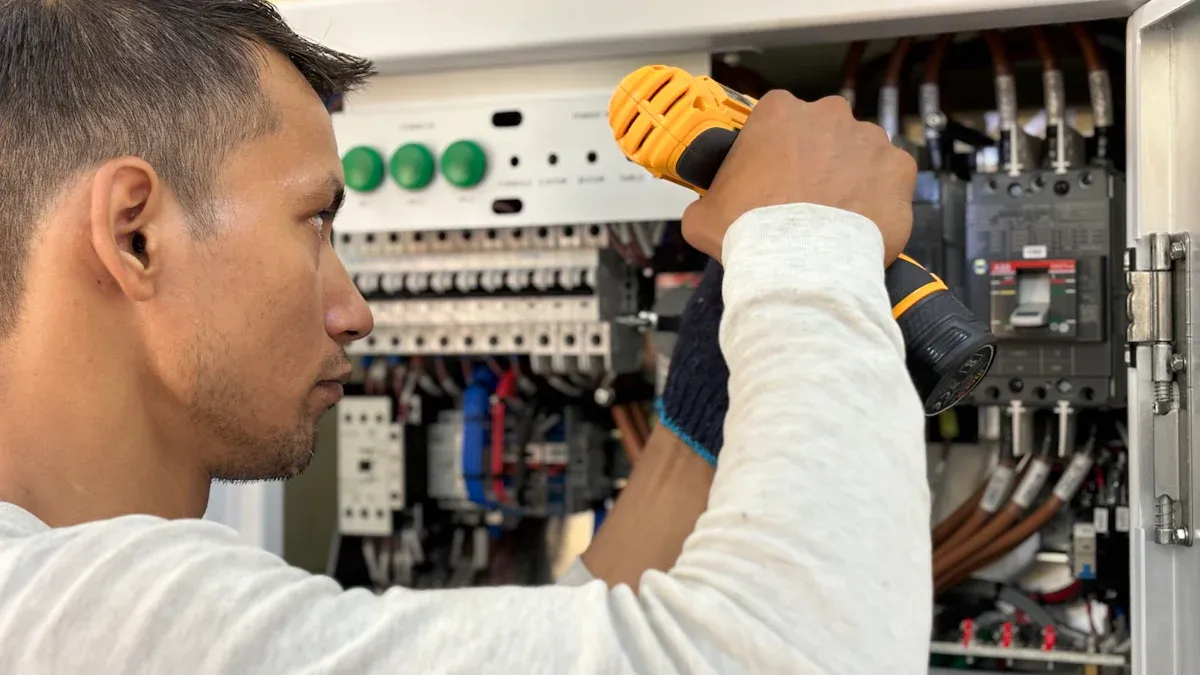
You may ask, why does my mcb keep tripping? This question often points to a few frequent problems in your electrical system. Understanding these issues helps you maintain reliable protection for your circuits.
Overloading: When you connect too many devices to one circuit, the breaker trips to prevent overheating. You can test this by turning off the breaker and unplugging some devices. If the breaker stays on after reducing the load, overloading caused the problem.
Short circuit: A short circuit happens when a live wire touches a neutral or ground wire. This situation triggers the breaker’s short circuit protection. You can check for this by unplugging all devices and testing each one individually. If the breaker trips with a specific device, that device may have a fault.
Ground fault: Sometimes, current takes an unintended path to the ground. This issue can cause the breaker to trip. Specialized breakers can help you identify ground faults quickly.
You may also notice nuisance tripping, which can occur if the breaker is too sensitive or if wiring is damaged. Always check for visible signs of wear or overheating on wires and connections. Using a multimeter, you can test the breaker’s function and confirm if it needs replacement.
Tip: Regular inspection of your miniature circuit breaker ensures ongoing protection and reduces the risk of unexpected outages.
When you need to replace a miniature circuit breaker, safety comes first. Always turn off the main power before you begin. Use a voltage tester to confirm that no current flows through the panel. Remove the faulty breaker by loosening the terminal screws and gently pulling it out.
You should choose high-quality replacement parts for reliable protection. HAIPART Miniature Circuit Breaker Parts offer consistent performance and durability. Their advanced design supports fast arc extinction and precise short circuit protection. When you install a new breaker, make sure the amperage and type match your system’s requirements. Tighten all connections securely, but avoid over-tightening, which can damage wires.
After installation, restore power and test the new breaker by switching it on and off. If you still wonder, why does my mcb keep tripping, double-check your wiring and connected devices.
Note: Using genuine HAIPART components ensures your electrical system meets the latest safety standards and delivers long-term protection.
You should call a licensed electrician if you cannot identify why does my mcb keep tripping or if you suspect a deeper issue in your electrical system. Complex problems, such as persistent short circuit protection trips or repeated ground faults, require expert diagnosis. An electrician uses specialized tools to inspect wiring, test for hidden faults, and ensure your protection devices work correctly.
You also need professional help if you notice burning smells, melted insulation, or frequent breaker failures. These signs indicate serious risks that demand immediate attention. Trusting a professional keeps your property safe and ensures your protection devices operate as designed.
Alert: Never ignore repeated tripping or signs of damage. Prompt action protects your electrical system and prevents hazards.
You make the best choice for safety and efficiency when you select the right MCB type for your electrical system. HAIPART stands as your trusted source for reliable Miniature Circuit Breaker Parts. Use the selection checklist to guide your decisions and consult a professional for complex electrical needs. Stay proactive about electrical safety and keep up with the latest trends for 2026.
You use an MCB to protect electrical circuits from overloads and short circuits. The device automatically interrupts the current flow when it detects a fault, preventing damage and ensuring safety.
You should consider the load type, current rating, and environment. Review the trip curve and pole configuration. Consult HAIPART’s selection checklist or contact their support team for expert guidance.
You can replace an MCB if you have basic electrical knowledge. Always turn off the main power and use proper tools. If you feel unsure, contact a licensed electrician for safe installation.
The trip curve shows how quickly an MCB responds to overcurrent. You match the curve to your equipment’s needs. For example, Type B trips faster than Type D, which suits heavy machinery.
You may experience repeated tripping due to overload, short circuit, or ground fault. Unplug devices and test each one. If the problem continues, inspect wiring or consult a professional.
You can trust HAIPART MCB parts to meet or exceed major standards like IEC 60898-1, IEC 60947-2, and UL 489. Always check product documentation for specific certifications.
You should inspect your MCBs at least once a year. Look for signs of wear, overheating, or damage. Regular maintenance ensures reliable protection and extends the lifespan of your electrical system.
You use a single pole MCB for one phase conductor, common in homes. Four pole MCBs protect three phases plus neutral, ideal for complex industrial or commercial systems needing complete isolation.


