



| Quantity: | |
|---|---|
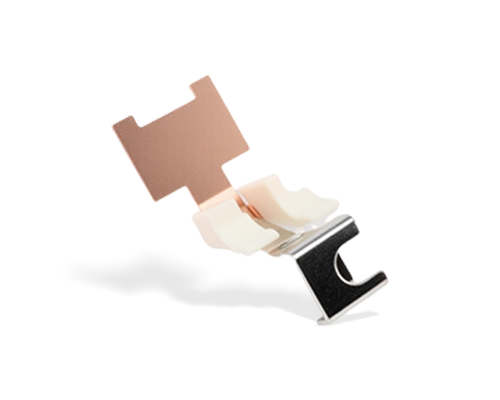
Arc Chamber
HAIPART
3052115
As a contact assembly manufacturer, HAIPART understands that the contact system is the core driver of a circuit breaker's breaking capacity. The static contacts are forged from a chromium-copper alloy, with a 20μm silver coating on the contact surface, ensuring a contact resistance of ≤5μΩ after a mechanical lifespan of 20,000 cycles. The arc striker plate utilizes an innovative segmented honeycomb structure, accelerating arc transfer through a dual-channel magnetic blow-off effect and pneumatic flow guidance, reducing breaking time to less than 8ms.
Applications:
Suitable for new energy, rail transit, smart grid, and other applications.
FAQ
Q1:What is the core function of contact assembly?
A1:It enables the connection and disconnection of circuits and undertakes the task of current transmission.
Q2:What is the relationship between contact assembly and operating mechanism?
A2:The operating mechanism drives the contact action but has no current carrying capacity. The contact action must be synchronized with the operating mechanism to avoid arcing due to asynchrony.
Q3:How to choose contact materials?
A3:Silver-based alloys are suitable for low-current, high-frequency applications; copper-based alloys are suitable for high-current, high-load applications.
Q4:How to match the rated current of the contacts?
A4:The contacts must support the maximum continuous current of the circuit, and contacts with high mechanical life must be selected for the motor circuit.
Q5:What are the requirements for the installation location of the contacts?
A5:The main contacts should be close to the main circuit of the circuit breaker to reduce wiring length; the auxiliary contacts should be installed in a location that is easy to maintain.
Q6:How to verify the reliability of contact action?
A6:Manual operation: Perform 10 consecutive opening and closing cycles to check for mechanism jamming or abnormal noise.
Electric operation: Simulate remote signals to verify the action time.
Q7:What are the common causes of contact welding?
A7:The contact spring pressure is too low, there are metal particles or foreign objects on the surface, or the breaking current is too high.
Q8:What are the prices of your products?
A8:Product prices vary depending on the model, specifications, and quantity. Please consult the sales team or check the official website for details.
Q9:What after-sales services do you provide?
A9:We provide comprehensive after-sales services, including product consultation, technical guidance, installation and commissioning, repair and replacement, and warranty.
Q10:How can I contact your technical support?
A10:Technical support can be contacted through the official website, customer service hotline, or email.
Get a Quote
+86-13819777367
Sales@haipart.com


