
Views: 0 Author: Site Editor Publish Time: 2025-11-18 Origin: Site
How reliable is your circuit breaker under fault conditions? Contact Assembly design is key to safe electrical interruptions. Poor design risks failure and damage.
Contact assemblies connect and disconnect electrical currents safely. Their breaking capacity ensures circuits interrupt fault currents without harm.
In this post, you’ll learn how contact assembly design affects breaking capacity. We’ll explore critical factors, types of breakers, and optimization tips.
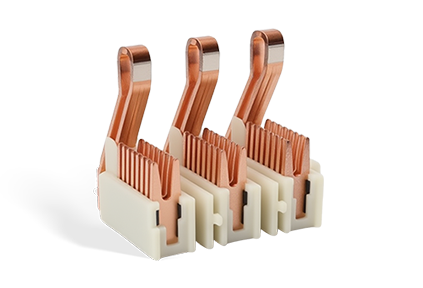
The breaking capacity of a contact assembly is influenced by multiple design factors. Understanding these is essential to improve contact assembly performance and reliability.
Choosing the right material directly affects contact assembly breaking strength and durability. Copper-chromium alloys, for example, offer a good balance of electrical conductivity and resistance to contact ablation. Materials with high melting points reduce wear caused by arc-induced heating, improving breaking capacity in contact assemblies. However, increased chromium content may raise contact temperature, requiring careful optimization for thermal management.
The shape and size of contact surfaces influence electrical connection quality and load capacity. Larger surface areas reduce contact resistance, minimizing heat generation during current flow. Optimizing contact geometry ensures uniform current distribution and reduces hotspots, enhancing contact assembly mechanical strength and breaking capacity.
Effective thermal management prevents overheating, a common failure mode that degrades breaking capacity. Design principles include adequate spacing for heat dissipation and use of materials with good thermal conductivity. Incorporating ventilation or cooling mechanisms can further improve contact assembly durability and performance factors.
Mechanical stability ensures consistent contact pressure and alignment, which are critical for maintaining reliable electrical connections. Vibration resistance prevents premature wear and failure. Contact assembly design optimization often includes stress analysis to enhance mechanical strength and reliability under operational stresses.
High-quality electrical connections reduce contact resistance and improve breaking strength. Terminal designs that facilitate secure and stable connections contribute to overall contact assembly reliability. Fast-connect or screw terminals must be selected based on current ratings and environmental conditions to avoid overheating or loosening.
Adequate spacing between contacts and components is vital to prevent heat buildup. Insufficient clearance can cause overheating, leading to reduced breaking capacity and premature failure. Standards such as IEC 61439 specify minimum creepage and clearance distances to ensure safety and performance.
Repeated breaking operations cause contact surface ablation, increasing resistance and temperature rise. This degradation can lead to re-ignition of arcs and failure to interrupt fault currents effectively. Utilizing materials like CuCr8 alloy and optimizing contact thickness and diameter can mitigate ablation effects, extending the life and breaking capacity of contact assemblies.
Tip: Regularly assess contact material and geometry during design to balance electrical performance and thermal resilience, ensuring optimal breaking capacity and long-term reliability.
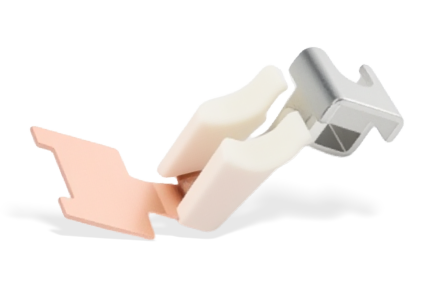
Thermal, magnetic, and thermal-magnetic breakers each have unique contact assembly designs that influence their breaking capacity. Thermal breakers utilize a bimetallic strip that bends with heat generated by current flow, providing a delayed trip for overloads. Their contact assemblies focus on heat dissipation to maintain stability. Magnetic breakers rely on solenoids that respond instantly to high current surges, requiring robust mechanical strength in contacts to withstand sudden electromagnetic forces. Thermal-magnetic breakers combine both mechanisms, incorporating contact assemblies designed for both thermal endurance and rapid magnetic response. These design principles impact the contact assembly’s breaking strength and overall reliability.
In demanding environments—such as aerospace or industrial settings with intense vibration and mechanical stress—high-performance circuit breakers feature specially engineered contact assemblies. These assemblies use advanced materials and reinforced mechanical structures to enhance breaking capacity and durability. For example, copper-chromium alloy contacts offer excellent electrical conductivity and resistance to arc-induced wear, critical for maintaining breaking strength over multiple operations. Additionally, optimized anchoring and vibration-resistant designs ensure contact alignment and pressure remain consistent, preventing premature failure.
Vacuum circuit breakers (VCBs) employ contact assemblies enclosed in a vacuum interrupter chamber, where arc quenching occurs. The vacuum environment allows for rapid dielectric recovery, enabling smaller contact gaps and faster interruption times. Contacts are typically made from copper alloys with additives like chromium to minimize welding and ablation. The contact assembly design balances thermal management and mechanical strength to handle breaking currents up to 63 kA or more. VCBs are favored for medium voltage applications due to their high breaking capacity, long mechanical life, and low maintenance requirements.
SF6 and air blast circuit breakers utilize gaseous mediums to extinguish arcs. Their contact assemblies must withstand intense thermal and mechanical stresses caused by rapid arc formation and quenching. SF6 breakers feature sealed contact chambers filled with sulfur hexafluoride gas, which has high dielectric strength and excellent arc-quenching properties. Contact materials are selected for resistance to oxidation and arc erosion, often incorporating silver or copper alloys with specialized coatings. Air blast breakers use compressed air to cool and blow out arcs; their contacts require robust mechanical design to resist high-pressure forces and thermal cycling. Both types demand precise spacing and cooling provisions within the contact assembly to maintain breaking capacity and reliability.
Tip: When selecting circuit breakers, consider how the contact assembly design aligns with the application’s environmental and electrical stressors to ensure optimal breaking capacity and long-term reliability.
Optimizing a contact assembly is key to improving its breaking capacity and overall reliability. Several design strategies help minimize contact resistance, ensure proper contact pressure and alignment, utilize advanced materials, incorporate simulations, and enable modular assembly for flexibility.
Low contact resistance reduces heat generation during current interruption, directly impacting breaking strength. To achieve this:
Use smooth, clean contact surfaces to maximize conductivity.
Increase contact surface area where feasible.
Employ coatings or alloys that resist oxidation and wear.
Maintain consistent contact pressure to avoid micro-arcing.
Proper contact pressure ensures a stable electrical connection and prevents contact bounce during switching. Misalignment can cause uneven wear and reduced breaking capacity. Design considerations include:
Spring mechanisms calibrated for optimal pressure.
Precision machining to maintain alignment tolerances.
Use of flexible or compliant materials to accommodate mechanical stress.
Copper-chromium (CuCr) alloys balance electrical conductivity with resistance to contact material ablation. Benefits include:
High thermal conductivity to dissipate heat.
Increased mechanical strength and durability.
Resistance to welding and oxidation under arc conditions.
Optimizing chromium content is essential; higher chromium improves wear resistance but may increase contact temperature, requiring careful balance.
Simulations help predict stress and temperature distributions, guiding design optimization:
Thermal simulations identify hotspots and evaluate heat dissipation.
Mechanical stress analysis ensures structural integrity under electrodynamic forces.
Coupled electromagnetic-thermal models simulate arc effects on contacts.
These tools reduce prototyping time and improve design accuracy.
Modular contact assemblies facilitate easier maintenance and future upgrades:
Standardized components simplify replacement and reduce downtime.
Modular designs allow selective upgrading of materials or geometry.
Flexibility to adapt to different current ratings or environmental conditions.
Tip: When optimizing contact assemblies, integrate advanced materials like CuCr alloys with precise mechanical design and use thermal-mechanical simulations to balance conductivity, durability, and breaking capacity effectively.
Verifying contact assembly breaking strength is vital to ensure reliable circuit protection. Manufacturers follow stringent standards such as IEC 61439-1 and IEC 60947-2 to validate assemblies. These standards specify routine and type tests that assess mechanical strength, dielectric properties, thermal performance, and short-circuit withstand capabilities.
Routine tests are performed on every assembly to detect manufacturing defects or installation errors. Type tests, often conducted on prototype assemblies, confirm design compliance with breaking capacity requirements. Testing includes visual inspections, mechanical operation checks, and electrical performance verifications.
Thermal rise testing evaluates the temperature increase in contact assemblies under rated current conditions. Excessive heating can degrade contact materials, reduce mechanical strength, and impair breaking capacity. Tests simulate continuous load to ensure temperature limits specified by standards are not exceeded.
For example, IEC 61439-1 limits temperature rise on terminals to 70 K above ambient. Thermal simulations and measurements confirm that assemblies dissipate heat effectively, preventing overheating during normal operation. Proper thermal management is crucial for contact assembly durability and breaking strength.
Short-circuit withstand strength testing subjects contact assemblies to fault currents up to their rated breaking capacity. The goal is to verify mechanical and thermal resilience during high electrodynamic stresses. Tests confirm that assemblies withstand these stresses without damage or loss of functionality.
Testing involves applying short-circuit currents for specified durations (commonly 1 second) and measuring mechanical deformation and temperature rise. Assemblies passing these tests demonstrate sufficient breaking capacity to safely interrupt fault currents in service.
Dielectric tests apply power-frequency voltage between live parts and earth to verify insulation integrity. Impulse voltage tests simulate transient overvoltages caused by lightning or switching surges. Both tests ensure contact assemblies maintain electrical isolation under stress.
Standards require that assemblies withstand these voltages without breakdown, preserving safety and reliability. Verification includes measuring creepage and clearance distances to prevent flashovers, maintaining the rated insulation voltage (Ui) and impulse withstand voltage (Uimp).
Mechanical testing assesses the contact assembly’s operation under normal and adverse conditions. Vibration tests simulate environmental stresses that could loosen connections or misalign contacts, reducing breaking capacity. Operation tests verify smooth and consistent contact movement.
These tests help identify potential failure modes caused by mechanical wear or external forces, ensuring assemblies maintain contact pressure and alignment throughout their service life.
Even the best-designed contact assemblies require correct installation to achieve rated breaking capacity. Improper mounting, insufficient tightening, or inadequate spacing can lead to overheating, mechanical stress, or premature wear.
Routine verification after installation includes visual inspections, thermal imaging, and electrical tests to detect early signs of degradation. Regular maintenance and testing extend contact assembly reliability and ensure safe interruption of fault currents.
Tip: Always perform comprehensive type and routine tests on contact assemblies—including thermal rise, short-circuit withstand, dielectric, and mechanical operation tests—to guarantee optimal breaking capacity and long-term system safety.
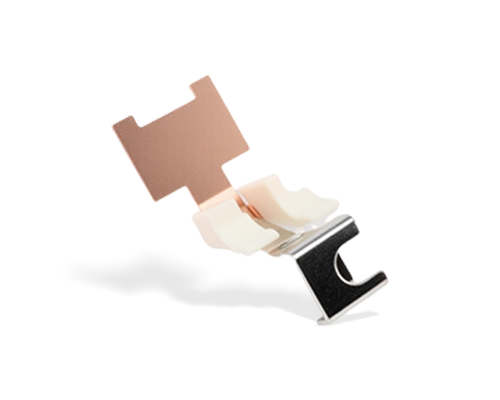
Designing a contact assembly with the right breaking capacity is crucial for electrical safety and system reliability. However, several common mistakes can undermine the performance and durability of the contact assembly, leading to reduced breaking strength and potential failures.
One frequent error is specifying a breaking capacity that does not match the actual fault current levels of the system. Over-specifying leads to unnecessary costs and oversized components, while under-specifying risks catastrophic failure during fault interruption. Engineers must carefully analyze the system’s prospective short-circuit current and select contact assemblies with appropriate breaking capacity ratings to ensure both safety and cost-efficiency.
Insufficient spacing between contacts or adjacent components restricts heat dissipation, causing localized overheating. This thermal stress accelerates contact wear and reduces breaking strength. Following established contact assembly design principles, such as maintaining proper creepage and clearance distances per IEC standards, is essential to prevent heat buildup and preserve contact assembly durability.
Choosing unsuitable contact materials or terminals can significantly impact contact assembly performance factors. For example, using materials with low resistance to arc ablation or poor mechanical strength compromises breaking capacity. Similarly, terminals that do not match current ratings or environmental conditions may lead to loose connections and overheating. Careful contact assembly material selection and terminal design optimization are vital for reliable operation.
Environmental factors like temperature, altitude, and humidity affect the contact assembly’s load capacity and breaking strength. Neglecting to derate components accordingly can cause premature failure or unsafe operation. Designers should incorporate contact assembly stress analysis and consider derating guidelines to maintain optimal breaking capacity under diverse service conditions.
Mechanical vibrations and stresses can misalign contacts or loosen connections, degrading contact assembly mechanical strength and reliability. Overlooking these factors during design optimization leads to increased failure modes and reduced breaking capacity. Incorporating vibration resistance features and robust mechanical supports enhances contact assembly reliability in demanding environments.
Using circuit breakers as regular on/off switches without proper consideration can cause frequent mechanical wear and contact degradation. This misuse diminishes the electrical contact breaking capacity over time. It is important to follow manufacturer recommendations and apply circuit breakers within their intended operational scope to avoid unnecessary stress and failure.
Tip: Always align contact assembly breaking capacity specifications with accurate fault current analysis, maintain proper spacing and material selection, and account for environmental and mechanical stresses to optimize performance and durability.
Designing a contact assembly that achieves optimal breaking capacity involves careful consideration of materials, thermal management, mechanical support, and compliance with standards. Here are essential guidelines to help engineers and designers enhance contact assembly performance and reliability.
Material choice is pivotal for contact assembly durability and breaking strength. Copper-chromium alloys, particularly CuCr8, strike a good balance between electrical conductivity and resistance to contact ablation. These materials withstand high temperatures during arc interruptions, reducing wear and extending service life. Optimizing contact thickness and diameter also influences breaking capacity—thicker contacts can dissipate heat better, while appropriate diameter ensures adequate current distribution. However, increasing size must be balanced with space constraints in assemblies.
Overheating is a primary cause of contact assembly failure. Effective thermal management strategies include:
Providing sufficient spacing between contacts and adjacent components to facilitate heat dissipation.
Using materials with high thermal conductivity for contact seats and terminals.
Incorporating ventilation or cooling features where feasible.
Designing contact geometry to distribute current evenly, avoiding hotspots.
Thermal simulations can help predict temperature rises and guide design adjustments to keep temperatures within safe limits.
Mechanical stability is crucial for maintaining reliable electrical connections, especially under short-circuit electrodynamic forces. Proper anchoring of conductors and busbars near circuit breakers minimizes vibrations and mechanical stress, preventing contact misalignment or loosening. For example, the first anchor plate for busbars should be positioned within specified distances from breaker terminals to withstand peak short-circuit currents safely. Consult device manuals for exact anchoring recommendations.
Compliance with standards such as IEC 61439 ensures safety and performance. Maintain minimum creepage and clearance distances between live parts and between live and exposed conductive parts, considering pollution degree and material group. Proper insulation distances reduce the risk of flashovers and dielectric breakdowns, enhancing the assembly's breaking capacity.
Ensure the busbar cross-sectional area and layout match the current and breaking capacity requirements. Use appropriate joints and supports to maintain mechanical strength and electrical continuity. Proper alignment between circuit breaker terminals and busbars, considering terminal orientation (vertical or horizontal), influences heat dissipation and ease of maintenance.
Design assemblies for ease of inspection, testing, and component replacement. Modular designs facilitate maintenance and upgrades without extensive disassembly. Use materials and configurations that minimize wear and allow for reliable operation over many breaking cycles. Regular verification of contact resistance and thermal conditions helps detect early degradation.
Tip: Prioritize copper-chromium alloy contacts with optimized dimensions, ensure effective thermal management, and secure mechanical anchoring close to breaker terminals to maximize breaking capacity and assembly reliability.
Enhancing system safety and reliability depends heavily on thoughtful contact assembly design. Key considerations include material choice, thermal management, mechanical stability, and adherence to standards. Optimized contact assemblies improve breaking capacity, reducing failures and extending service life. Emerging technologies focus on advanced materials and simulation tools for better performance. Engineers should prioritize these design principles to ensure durable, efficient contact assemblies. HAIPART offers innovative solutions that enhance breaking capacity and reliability, providing exceptional value for electrical protection systems.
A: A contact assembly is the component within a circuit breaker that makes and breaks electrical connections. Its design—including material selection, geometry, and mechanical stability—directly affects breaking capacity by influencing contact assembly breaking strength, thermal management, and durability, ensuring reliable interruption of fault currents.
A: Contact assembly material selection, such as using copper-chromium alloys, balances electrical conductivity and resistance to arc ablation. Proper materials improve contact assembly durability and mechanical strength, enhancing electrical contact breaking capacity and reducing wear during switching operations.
A: Effective thermal management in contact assemblies prevents overheating, a key failure mode that reduces breaking capacity. Design principles like adequate spacing, high thermal conductivity materials, and cooling features improve contact assembly performance factors and long-term reliability.
A: Optimization involves minimizing contact resistance, ensuring proper pressure and alignment, and using advanced materials. Incorporating thermal and mechanical stress analysis helps enhance contact assembly mechanical strength and reliability, ultimately improving breaking capacity.
A: Common failure modes include contact wear and ablation, overheating due to inadequate spacing, mechanical misalignment from vibration, and improper material choice. Addressing these through design principles and stress analysis enhances contact assembly durability and breaking strength.
The making capacity is the maximum current a contactor can safely close onto without welding or mechanical failure—typically several times the rated current due to electrodynamic forces at the moment of closure.
The breaking capacity is the maximum fault current the contactor can interrupt without excessive arc energy damaging the contacts.
Both depend heavily on contact assembly design, including material selection, contact geometry, thermal properties, and arc management. High-performance contactors use copper-based alloys and optimized contact profiles to withstand electrodynamic forces during making and thermal stress during breaking.
For circuit breakers, making capacity is the peak current the breaker can close onto during a fault (usually 2.5 times the breaking capacity). Breaking capacity is the highest prospective short-circuit current the breaker can safely interrupt without failure.
Breakers rely on robust contact assemblies with advanced materials (e.g., CuCr alloys), arc chutes, and precise spacing to withstand thermal and mechanical stresses during interruption.
Breaking capacity is determined by:
Prospective short-circuit current (Isc) at the installation point
Standards (IEC 60947-2, IEC 61439)
Contact assembly withstand strength—thermal, electrodynamic, and arc-handling capability
Manufacturers test contact assemblies using type-tested short-circuit withstand tests to guarantee that the mechanism can interrupt the specified fault current without losing mechanical integrity.
Higher breaking capacity is beneficial only if needed.
Excessively high Icu ratings increase cost and size but offer no real advantage unless the system’s fault level requires it. For industrial systems with high prospective fault currents, however, higher breaking capacity ensures the contact assembly will not weld, deform, or erode during interruption.
During closing, electrodynamic forces peak at the moment contacts touch under fault conditions. Standards define the making capacity (Icm) as 2.5 × Icu for AC systems to ensure the contact assembly can survive the enormous peak forces before arc formation.
This ratio accounts for:
Crest factor of AC waveforms
Electrodynamic repulsion between contacts
High mechanical impact loads
Breaker capacity = the maximum symmetrical short-circuit current at the point of installation.
Formula inputs include:
Transformer capacity
Impedance of conductors, busbars, and transformers
Fault level calculations (per IEC 60909)
This fault level must be matched or exceeded by the breaker’s Icu/Ics rating.
Modern low-voltage breakers can reach up to 150 kA (Icu).
Medium-voltage VCBs and SF6 breakers can exceed 50–63 kA depending on the design. The maximum is governed by contact assembly strength and arc-quenching technology.
VCB advantages:
Excellent contact durability (CuCr contacts)
Long life (10,000+ operations)
No greenhouse gas
Superior arc quenching in medium voltage
Low maintenance
SF6 advantages:
Exceptional dielectric strength
Very high breaking capacity
Compact design
However, SF6 is being phased out in many regions due to environmental concerns. For most MV applications, VCB is preferred.
Because VCBs provide:
Significantly higher breaking capacity
Much longer mechanical life
Faster dielectric recovery
Better performance at medium voltage
ACBs struggle with intense arc energy at medium voltage, while VCBs use a vacuum to extinguish arcs instantly.
Use 6 kA breakers in residential or light commercial systems with low fault levels.
Use 10 kA or higher where fault currents exceed 6 kA—typically industrial and commercial installations.
The contact assembly’s arc-handling ability determines which rating is required.
Icu (Ultimate Breaking Capacity) is the maximum short-circuit current the breaker can interrupt once without catastrophic failure. It is defined by IEC 60947-2 and represents the upper limit of the contact assembly’s withstand capability.
Type B breakers (MCBs) typically offer:
Breaking capacity: 6 kA or 10 kA
Trip characteristics: 3–5 × In (for magnetics)
Used mainly for residential and light commercial applications.
VCB breaking capacities typically range from 25 kA to 63 kA for medium-voltage switchgear.
The vacuum interrupter design and CuCr contact assembly determine the final rating.
Breaking capacity (Icu)
Ability to interrupt fault current.
Making capacity (Icm)
Ability to close onto a fault without mechanical damage.
Making capacity is always higher because electrodynamic forces peak at the moment of contact closure.
Overcurrent is prevented by protection devices such as:
Circuit breakers with thermal-magnetic trip units
Fuses
Electronic protection relays
However, the contact assembly must be capable of physically withstanding the breaking current, or the trip mechanism cannot operate safely.
The left-hand rule explains the direction of force generated when current flows through breaker contacts.
In contact assemblies, this magnetic force causes repulsion between parallel conductors, influencing:
Contact design
Pressure mechanisms
Anti-welding structures
It is fundamental in understanding electrodynamic stress on breaker contacts.


