
Views: 0 Author: Site Editor Publish Time: 2026-01-26 Origin: Site
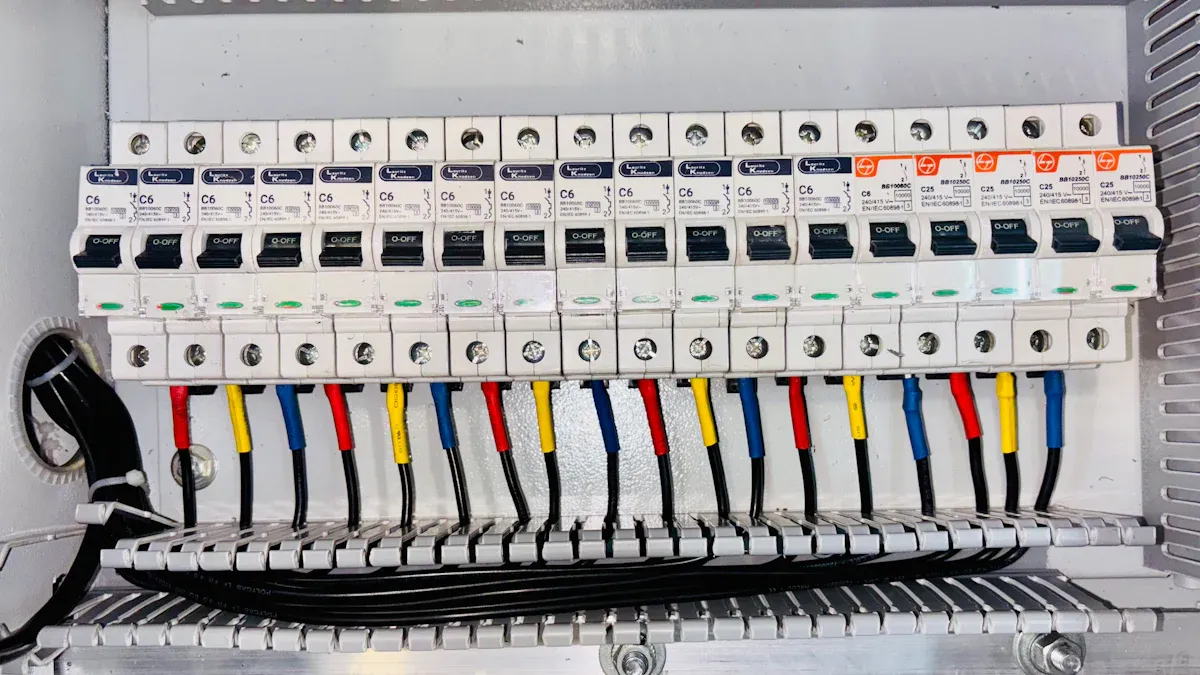
Miniature circuit breaker manufacturing demands precision and efficiency at every stage. Advanced automation and strict quality control drive modern production, with manufacturers relying on reliable materials and innovative machine technology. Recent industry data shows a shift toward ultra-slim designs, wireless communication, and integrated arc-fault detection.
Over 90 new product lines emphasize miniaturization and digital features.
Ultra-slim MCBs are replacing traditional models.
Smart units with wireless capabilities are now widespread.
Haipart’s Automatic Welding Machine stands out, combining seamless integration and rapid cycle times to achieve MCB Manufacturing: Crafting Essential Components for Accuracy & Efficiency.
Miniature circuit breakers (MCBs) protect electrical circuits from damage by automatically interrupting current flow during overloads.
Precision in manufacturing MCBs is crucial; even small errors can lead to safety risks.
Advanced automation, like Haipart’s Automatic Welding Machine, enhances production speed and quality.
Using high-quality materials, such as copper and thermoplastics, ensures MCBs are durable and reliable.
Regular testing and calibration of MCBs improve their performance and reduce failure rates.
The shift towards electronic and solid-state MCBs offers faster fault detection and longer lifespans.
Sustainable practices in MCB manufacturing help reduce environmental impact and support recycling efforts.
Manufacturers benefit from data transparency through Manufacturing Execution Systems (MES), optimizing production processes.
A miniature circuit breaker is an automatic switching device designed to protect electrical circuits from damage caused by excess current. This device plays a critical role in modern electrical systems. When current exceeds safe levels, the mini circuit breaker interrupts the flow, preventing overheating and reducing the risk of fire. Unlike traditional fuses, a mini circuit breaker can be reset after tripping, making it a reliable and reusable solution for circuit protection.
The operational principle of a mini circuit breaker relies on two mechanisms. The thermal mechanism uses a bimetallic strip that bends when heated by excessive current, triggering the trip mechanism to open the circuit. The magnetic mechanism employs an electromagnet that reacts to sudden surges in current, disconnecting the circuit almost instantly. This dual-action approach ensures that the mini circuit breaker provides effective protection against both overloads and short circuits.
Precision and efficiency are essential in mini circuit breaker manufacturing. The mini circuit breaker manufacturer process must guarantee that each device responds accurately to electrical faults. Even a slight deviation in the mini circuit breaker manufacturing steps can compromise safety.
MCBs automatically disconnect circuits when current exceeds safe levels, preventing overheating, fires, or damage to electrical devices.
When a short circuit occurs, MCBs trip the circuit quickly, cutting off excessive current and protecting equipment.
MCBs prevent fluctuations in current that could damage costly equipment, ensuring stable and safe power for machinery and devices.
MCBs contribute to the smooth functioning of electrical systems by preventing faults, reducing downtime, and enhancing overall operational efficiency.
The mini circuit breaker manufacturing process must deliver consistent results. High-precision assembly and strict quality control ensure that every mcb meets industry standards. Choosing a reputable mini circuit breaker manufacturer is vital for safety and reliability.
Note: The accuracy of the mini circuit breaker manufacturer process directly impacts the safety and performance of electrical systems.
The mini circuit breaker consists of several key components. Each part must meet strict requirements to ensure the device functions correctly. The main elements include:
Housing: Made from high-quality thermoplastics, providing insulation and durability.
Contacts: Usually crafted from copper or copper alloys, sometimes with a silver coating for better conductivity.
Bimetallic Strip: Responsible for thermal tripping, made from metals with different expansion rates.
Electromagnet: Enables rapid response to short circuits.
Arc Chute: Extinguishes the electrical arc formed during switching.
The mini circuit breaker manufacturing steps involve careful selection and testing of these materials. The process ensures that each mcb can withstand electrical and mechanical stress. Reliable materials and advanced mini circuit breaker manufacturing techniques are essential for producing devices that meet the demands of modern electrical systems.
A well-designed mini circuit breaker, produced through a precise mini circuit breaker manufacturer process, delivers long-term safety and efficiency. The mini circuit breaker manufacturing process continues to evolve, integrating automation and advanced inspection to meet growing industry needs.
Manufacturers select conductive metals and alloys with great care to ensure the performance and reliability of miniature circuit breakers. Copper stands out as the preferred choice for current-carrying components due to its exceptional electrical conductivity. This property allows copper to transmit electrical energy efficiently, minimizing resistance and heat buildup. Brass and steel play a critical role in the construction of bimetallic strips. These strips are engineered to respond to overload conditions by bending and triggering the trip mechanism when the current exceeds safe limits. Brass offers a balance of conductivity and mechanical strength, while steel provides the necessary thermal response for precise time delays. The combination of these metals ensures that high-quality mcbs deliver consistent protection against electrical faults.
Tip: The selection of copper, brass, and steel directly impacts the accuracy and longevity of miniature circuit breakers.
The housing and insulation components of miniature circuit breakers rely on advanced thermoplastics and insulators. Manufacturers use high-precision thermoplastics such as polyamide and polycarbonate for their excellent electrical insulation, mechanical strength, and resistance to heat. These materials protect internal components from environmental factors and electrical stress. Insulators prevent unintended current flow, reducing the risk of short circuits and enhancing device safety. The use of robust thermoplastics also contributes to the durability and compact design of modern high-quality mcbs. By choosing materials with superior thermal stability and flame-retardant properties, manufacturers ensure that circuit breakers maintain their integrity under demanding conditions.
| Material | Key Properties | Application in MCBs |
|---|---|---|
| Copper | High conductivity, ductility | Contacts, terminals |
| Brass | Conductivity, strength | Bimetallic strips |
| Steel | Thermal response, durability | Bimetallic strips, frames |
| Polyamide | Insulation, heat resistance | Housing, insulation |
| Polycarbonate | Strength, flame retardance | Housing, arc chutes |
Rigorous material testing forms the foundation of reliable miniature circuit breaker production. Manufacturers conduct comprehensive assessments to verify the purity, conductivity, and mechanical properties of metals and thermoplastics. Tests include tensile strength measurements, thermal cycling, and electrical insulation checks. These procedures confirm that each batch of raw materials meets strict industry standards. Material quality directly influences the tripping accuracy and safety of the final product. Only materials that pass all tests are approved for use in assembly lines. This commitment to quality control ensures that every miniature circuit breaker operates as intended, providing dependable protection in residential, commercial, and industrial settings.
Note: Consistent material testing is essential for maintaining the safety and performance of miniature circuit breakers.
Design and prototyping mark the beginning of mcb manufacturing: crafting essential components for accuracy & efficiency. Engineers use advanced CAD tools to create detailed models of each mini circuit breaker. These digital models allow for precise simulation of electrical and mechanical behavior. Simulation software predicts how the mcb will respond to overloads, short circuits, and environmental stress. This step ensures accuracy in every aspect of the design, from the housing dimensions to the placement of contacts.
Prototyping follows the digital design phase. Manufacturers produce physical samples using rapid prototyping techniques. These prototypes undergo rigorous testing to verify accuracy and performance. The process identifies potential flaws before mass production begins. By refining the design at this stage, manufacturers improve circuit breaker manufacturing technology and reduce costly errors later in the process.
Precision molding and stamping play a critical role in mcb manufacturing: crafting essential components for accuracy & efficiency. The housing and internal frames of each mini circuit breaker are formed using high-precision molds. These molds shape thermoplastics and metals to exact specifications, ensuring that every mcb fits seamlessly into electrical panels.
Stamping machines cut and shape metal components, such as bimetallic strips and arc chutes. The process demands strict control over temperature, pressure, and timing. Any deviation can affect the accuracy of the final product. Manufacturers rely on circuit breaker manufacturing technology to maintain consistency across thousands of units. Automated inspection systems check each molded and stamped part for defects, supporting both accuracy and efficiency.
Tip: Automated molding and stamping reduce human error and increase output quality, making them essential for modern mcb manufacturing: crafting essential components for accuracy & efficiency.
Contact cutting and coating represent a vital stage in mcb manufacturing: crafting essential components for accuracy & efficiency. The contacts inside a mini circuit breaker must conduct electricity efficiently and withstand repeated switching cycles. Manufacturers use copper-silver alloy for these contacts, leveraging the strengths of both metals.
The table below highlights the benefits of copper-silver alloy contacts in mini circuit breaker production:
| Benefit | Explanation |
|---|---|
| Electrical Conductivity | Silver ensures rapid current flow, minimizing energy loss as heat. |
| Heat Management | Copper draws excess heat away from the contact surface, preventing overheating in high-load applications. |
| Resistance to Wear and Arcing | The alloy is engineered to resist arc erosion and mechanical wear, extending the contact's lifespan. |
| Improved Wear Life | Composite contacts showed 30% longer wear life compared to standard silver-plated contacts. |
Precision cutting machines shape each contact to exact dimensions. The process uses laser or mechanical cutting tools, depending on the circuit breaker manufacturing technology in place. After cutting, contacts receive a protective coating to enhance durability and resist corrosion. This step ensures accuracy in electrical performance and extends the lifespan of every mcb.
Manufacturers face several challenges during the production of essential mcb components. These include:
High initial cost of advanced mcbs, especially smart and high-performance models.
Lack of skilled workforce for deployment and maintenance of smart mcbs and energy-efficient systems.
Regulatory and compliance challenges due to varying standards across regions.
Manufacturers address these challenges by investing in automation, training, and global compliance strategies. The process continues to evolve, with circuit breaker manufacturing technology driving improvements in accuracy and reliability.
Note: The combination of advanced materials, precision engineering, and automated inspection ensures that each mini circuit breaker meets strict standards for accuracy and efficiency.
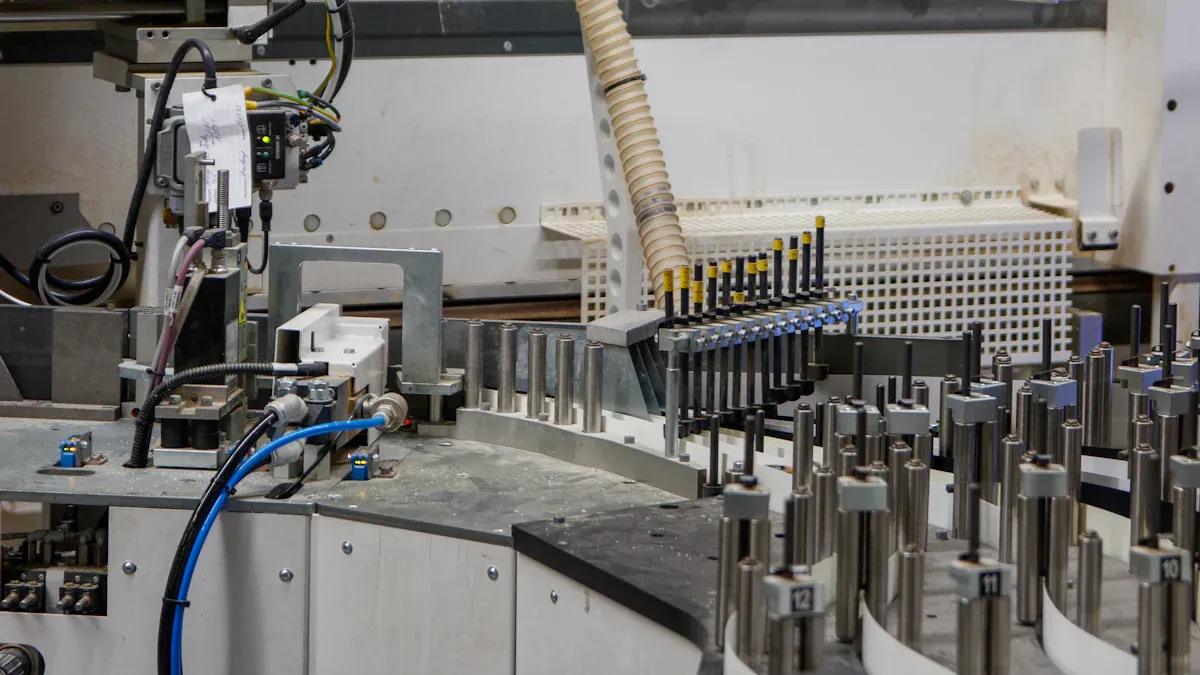
Automation has transformed the assembly of mini circuit breaker components. Modern manufacturing facilities rely on advanced welding and assembly lines to achieve high output and consistent quality. These lines use a combination of robotics, precision feeders, and programmable logic controllers to manage each step of the process. The machine handles the placement, welding, and joining of critical parts with remarkable accuracy. This approach ensures that every mini circuit breaker meets strict dimensional and electrical standards.
The following table outlines the key features of automatic welding and assembly lines used in mcb manufacturing:
| Feature | Description |
|---|---|
| Improving production efficiency and capacity | Continuous, takt-based automated operation significantly increases output for large-scale manufacturing. |
| Enabling standardized and repeatable production | Unified process flows ensure stable production across different MCB ratings and models. |
| Supporting quality control and in-line testing | Integrated inspection and testing improve yield by detecting deviations in real time. |
| Reducing overall manufacturing costs | Automation decreases labor dependency and rework rates while maintaining product quality. |
Automated lines support the entire process, from raw material handling to final assembly. The machine ensures that each mcb receives the correct components in the right sequence. This level of control reduces errors and minimizes waste. Optimizing efficiency with mcb cage terminal automatic assembly machine allows manufacturers to scale production while maintaining high standards.
Haipart’s Automatic Welding Machine represents a breakthrough in the assembly of mini circuit breaker components. This machine integrates automatic feeding, welding, and in-process inspection into a single streamlined system. The machine achieves a cycle time of under four seconds, which dramatically increases throughput for mcb production. The modular design of the machine allows for easy maintenance and quick adaptation to different mini circuit breaker models.
The machine supports multiple welding techniques, including resistance welding, argon arc welding, and induction welding. Each method is monitored for optimal performance, ensuring that every weld meets strict quality requirements. The machine’s insertion mechanism guarantees precise alignment and synchronization of parts. This feature is essential for the reliable operation of each mini circuit breaker.
Haipart’s solution also includes a user-friendly software platform. Operators can monitor real-time data such as cycle time, overall equipment effectiveness, and first pass yield. This transparency helps manufacturers identify bottlenecks and optimize efficiency with mcb cage terminal automatic assembly machine. The machine’s alarm system directs maintenance personnel to specific stations, reducing downtime and supporting continuous operation.
Optimizing efficiency with mcb cage terminal automatic assembly machine is not just about speed. The machine ensures that each mcb is assembled with consistent quality. This reliability is crucial for safety and compliance in electrical systems. Haipart’s Automatic Welding Machine sets a new standard for efficiency and reliability in the industry.
In-process inspection and synchronization are vital for maintaining quality during the assembly of mini circuit breaker components. Automated systems use sensors and vision technology to check each mcb at multiple stages. The machine verifies the placement of contacts, the integrity of welds, and the alignment of moving parts. Any deviation triggers immediate corrective action, preventing defective units from reaching the next stage.
Synchronization ensures that each machine in the assembly line operates in harmony. The process relies on precise timing and communication between machines. This coordination reduces cycle time and prevents bottlenecks. The machine’s integrated inspection modules provide instant feedback, allowing operators to make adjustments in real time.
Manufacturers benefit from reduced labor costs and improved yield. The process minimizes human error and ensures that every mini circuit breaker meets performance standards. Optimizing efficiency with mcb cage terminal automatic assembly machine enables companies to deliver high-quality products at scale.
Tip: Real-time inspection and synchronization are essential for achieving consistent quality and high output in mcb manufacturing.
The integration of automation, advanced machine technology, and real-time inspection has redefined the assembly of mini circuit breaker components. These innovations ensure that each mcb delivers reliable protection and long-term performance.

The mcb calibration machine plays a pivotal role in ensuring the accurate performance of miniature circuit breakers. Manufacturers rely on this machine to verify that each mcb responds precisely to overloads and short circuits. The importance of mcb calibration cannot be overstated, as it directly impacts product reliability and safety. The mcb calibration machine uses a microcontroller to manage the calibration process, a load tester to simulate real-world electrical conditions, and a display unit for real-time monitoring. These components work together to deliver higher accuracy and reliability in every unit produced.
Precise calibration can reduce failure rates by up to 40%.
Accurate calibration can reduce malfunction rates by up to 30%.
Regular calibration helps identify weak points in the assembly process.
Common applications of mcb calibration machines include routine factory testing, batch verification, and post-assembly inspection. The machine ensures that each mcb meets strict operational thresholds before leaving the production line. The importance of mcb calibration extends to both residential and industrial circuit breakers, supporting consistent quality across diverse environments.
Quality testing and calibration form the backbone of mcb manufacturing. The mcb calibration machine supports a range of electrical and mechanical tests designed to validate the integrity of each mcb. Electrical testing involves subjecting the mcb to controlled overloads and short-circuit conditions. The machine records the trip time and verifies that the device disconnects power within specified limits. Mechanical testing evaluates the durability of moving parts, such as the bimetallic strip and contact mechanism. The mcb calibration machine performs repeated switching cycles to ensure long-term reliability.
Manufacturers conduct in-process testing at multiple stages. The machine checks for proper alignment, weld strength, and contact resistance. Final product testing confirms that each mcb meets industry standards for safety and performance. The importance of mcb calibration is evident in the reduction of defective units and improved operational consistency. Common applications of mcb calibration machines include quality assurance audits and certification testing.
Tip: Comprehensive testing with the mcb calibration machine guarantees that every mcb delivers dependable protection in real-world scenarios.
Compliance with international standards is essential for mcb manufacturers. The mcb calibration machine helps verify that each mcb adheres to the requirements set by governing bodies. Key standards include:
IEC 60898-1: Governs AC low-voltage circuit breakers for household and similar applications. Maximum rated current is 125A, and the maximum rated short-circuit capacity is 25kA.
IEC 60947-2: Applies to circuit breakers for industrial applications, covering electrical power distribution up to 1000 volts AC and 1500 volts DC, with rated currents from a few Amps to 6300A and higher.
The importance of mcb calibration ensures that products meet these standards, protecting users and equipment. The mcb calibration machine supports compliance by providing accurate data for certification and regulatory audits. Manufacturers rely on quality testing and calibration to maintain their reputation and fulfill market requirements. Common applications of mcb calibration machines include regulatory inspections and export certification.
Note: Adhering to international standards with the mcb calibration machine strengthens product quality and market acceptance.
The mcb industry has seen a significant shift toward electronic and solid-state designs. These advanced mcb units offer improved accuracy and reliability compared to traditional thermal-magnetic models. Electronic mcb devices use sensors and microprocessors to detect faults, allowing for faster response times and enhanced protection. Solid-state mcb models eliminate moving parts, which reduces wear and increases lifespan.
Manufacturers have introduced several features to boost safety and usability. The table below highlights key advancements in electronic and solid-state mcb technology:
| Feature | Description |
|---|---|
| Visual Operational Indicator | Displays circuit status with clear color signals. |
| Finger Safe Terminals | Prevents accidental contact, improving user safety. |
| Rising Conductor Cage Clamp | Secures various wire types for reliable connections. |
| Multi-stage Arc Extinguishing Chamber | Extinguishes arcs quickly, protecting internal components. |
| Hydraulic Electromagnetic Tripping | Enables immediate reset after a fault, increasing uptime. |
| Spring Loaded DIN Rail Locking Clip | Enhances shock and vibration resistance for industrial environments. |
| Flame Retardant Casing | Limits burning and plastic drops, meeting RoHS standards. |
| Immediate Reset Toggle Switch | Allows fast restoration of service without cooling periods. |
| Wide Operating Environment | Functions in extreme temperatures and altitudes. |
| Auxiliary Switch and Trip Alarm | Supports compact installations for AC and DC applications. |
| Applications | Suitable for telecom, residential, and industrial sectors. |
These innovations make the modern mcb more versatile and dependable. The adoption of electronic and solid-state mcb units supports safer electrical systems in homes, businesses, and industrial facilities.
Manufacturers now rely on Manufacturing Execution Systems (MES) to optimize mcb production. MES platforms collect and analyze data from every stage of the mcb assembly process. Operators monitor cycle times, equipment effectiveness, and yield rates in real time. This transparency allows for quick adjustments, reducing downtime and improving output quality.
MES integration also supports traceability. Each mcb receives a unique identifier, enabling manufacturers to track performance and maintenance history. Data-driven insights help engineers refine processes and address issues before they affect product quality. The result is a more efficient and reliable mcb manufacturing operation.
Tip: MES integration empowers manufacturers to maintain high standards and respond quickly to market demands.
Environmental responsibility has become a priority for mcb manufacturers. Companies adopt sustainable materials, such as bio-based plastics and recycled metals, to lower their environmental impact. Design principles now emphasize disassembly and recycling, supporting a circular economy.
The table below outlines leading sustainable practices in mcb manufacturing:
| Sustainable Practice | Description |
|---|---|
| Use of Sustainable Materials | Incorporates bio-based and recycled content in mcb components. |
| Circular Economy Design | Facilitates recycling and product take-back programs. |
| Smart Energy-Aware Circuit Breakers | Integrates energy management features for grid optimization. |
| Extended Lifespans and Durability | Designs mcb units for longer service life, reducing waste. |
| Industry Collaboration and Standards | Promotes green certifications and industry-wide sustainability initiatives. |
Sustainable manufacturing ensures that each mcb meets both performance and environmental standards. These practices help manufacturers reduce waste, conserve resources, and support global sustainability goals.
Every stage in MCB manufacturing, from material selection to automated assembly and rigorous testing, drives precision and efficiency. Advanced automation, such as Haipart’s solutions, ensures consistent quality. Industry leaders now focus on digital transformation, sustainability, and smart features to meet evolving safety needs. These innovations deliver safer, more reliable electrical systems. The expertise and technology behind modern MCBs set new standards for performance and industry advancement.
MCB stands for Miniature Circuit Breaker. This device protects electrical circuits from overloads and short circuits. It automatically interrupts current flow when unsafe conditions occur.
Automation increases production speed and consistency. Machines like Haipart’s Automatic Welding Machine ensure precise assembly, reduce errors, and improve overall product quality.
Copper, brass, and high-grade thermoplastics are essential. Copper provides excellent conductivity. Thermoplastics offer insulation and durability. Material quality directly affects safety and performance.
Haipart’s machine integrates automatic feeding, welding, and inspection. It achieves cycle times under four seconds. Real-time monitoring and modular design support high output and reliability.
Manufacturers use electrical overload tests, mechanical endurance checks, and calibration machines. These tests verify tripping accuracy, durability, and compliance with international standards.
Electronic MCBs offer faster fault detection and improved accuracy. Solid-state designs reduce wear and extend lifespan. These models suit advanced electrical systems and demanding environments.
MES platforms track production data, equipment effectiveness, and yield rates. This transparency enables quick adjustments, supports traceability, and helps optimize manufacturing processes.
Manufacturers use recycled metals, bio-based plastics, and design for recyclability. Energy-efficient production and green certifications support environmental responsibility.


