
Views: 0 Author: Site Editor Publish Time: 2026-01-26 Origin: Site
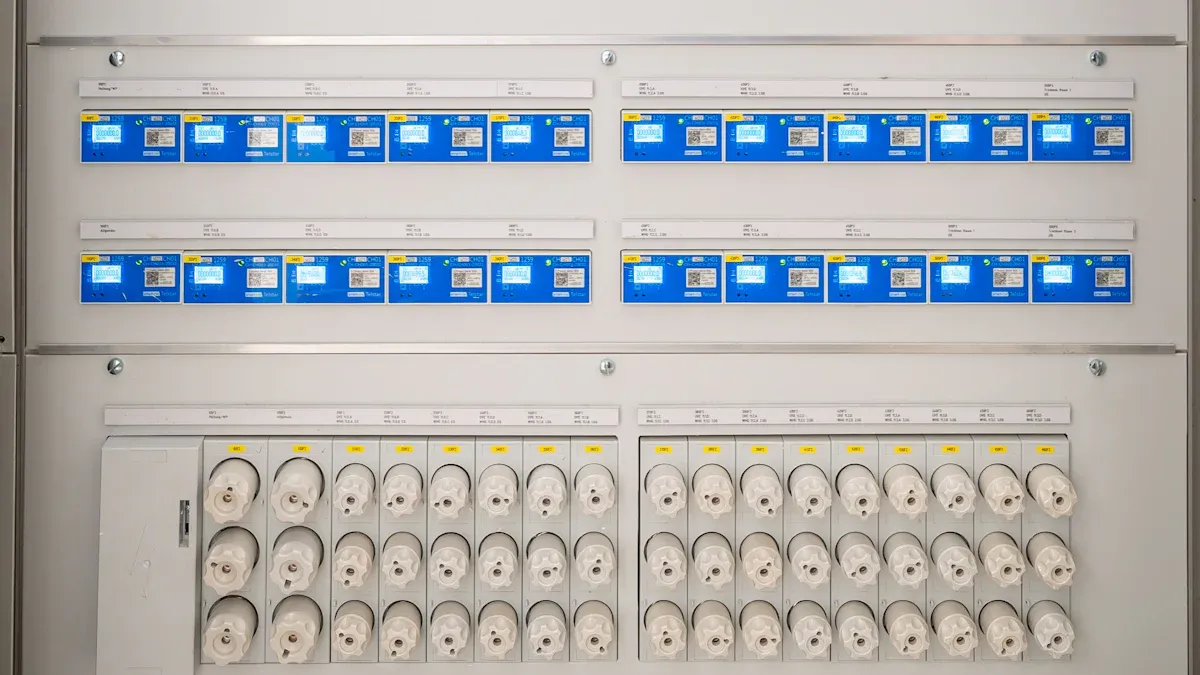
Power distribution boards composition includes several essential components that ensure safe and reliable electrical operation.
Main breaker delivers overcurrent protection and system isolation.
Bus bars distribute electrical power to branch circuits with full capacity.
Branch circuit breakers protect individual equipment and allow selective fault coordination.
Neutral and ground bars provide grounding and safe current return paths.
Metering equipment monitors voltage, current, and power quality.
Surge protection devices guard against voltage spikes.
Panel enclosure shields internal parts from environmental hazards.
Understanding each component is crucial for maintaining safety and optimizing power flow. Modern manufacturing, such as automated assembly lines for circuit breakers, enhances product reliability and consistency.
Power distribution boards are essential for safe and organized electrical systems in homes and businesses.
Key components include main switches, circuit breakers, and busbars, each playing a vital role in protection and efficiency.
Surge protection devices safeguard equipment from voltage spikes, preventing costly damage and downtime.
Regular inspection and maintenance of distribution boards enhance safety and ensure optimal performance.
Choosing the right distribution board type is crucial for meeting specific load requirements and future expansion needs.
A distribution board serves as the central hub for managing electrical circuits within a facility. It divides the incoming electrical supply into multiple branch circuits, each protected by dedicated devices. The distribution board, sometimes called a panelboard or fuse box, ensures safe and organized power delivery to various equipment and areas. Its design supports several critical functions, including circuit protection, control, and environmental isolation.
Note: Modern distribution boards are sophisticated systems. They incorporate surge protective devices, overcurrent protection, and earth fault protection as standard features. Smart distribution boards also offer remote monitoring and real-time analytics, enhancing safety and energy efficiency.
| Function | Description |
|---|---|
| Power distribution function | Distributes incoming main power to multiple branch circuits to meet the power demand of different equipment. |
| Circuit protection function | Equipped with protective components to cut off the circuit during faults like overload or short circuit. |
| Control function | Allows on-off control of each branch circuit for power management and maintenance. |
| Wiring integration function | Concentrates wiring in one box for neatness and ease of inspection. |
| Environmental protection function | Isolates internal components from external factors to ensure normal operation. |
The functions of distribution boards extend beyond basic power delivery. They provide organization, safety, and flexibility for future expansion. Metering features may be included to monitor energy consumption, supporting efficient management.
Power distribution boards composition relies on several structural elements that contribute to system safety and reliability. The main switch acts as the master control, enabling complete disconnection from the grid during maintenance or emergencies. Circuit breakers, including miniature circuit breakers (MCBs) and residual current devices (RCDs), protect circuits from overcurrent and short circuits. Busbars distribute current efficiently, minimizing wiring clutter and resistance.
Main switch for system isolation and initial protection
Circuit breakers (MCBs, RCBOs) for overcurrent and fault protection
Residual current devices (RCDs) for electric shock prevention
Busbars for low-resistance current distribution
Secure terminals for wiring connections
Surge protective devices for transient voltage protection
Manufacturers construct electrical distribution boards using recyclable and non-toxic materials, reducing environmental impact. International standards, such as IEC 61439-3, specify the required structural elements for distribution boards operated by ordinary persons. Understanding power distribution boards composition helps users determine how to choose a distribution board that meets safety and operational needs. Different types of distribution boards are available for residential, commercial, and industrial applications, each tailored to specific requirements.
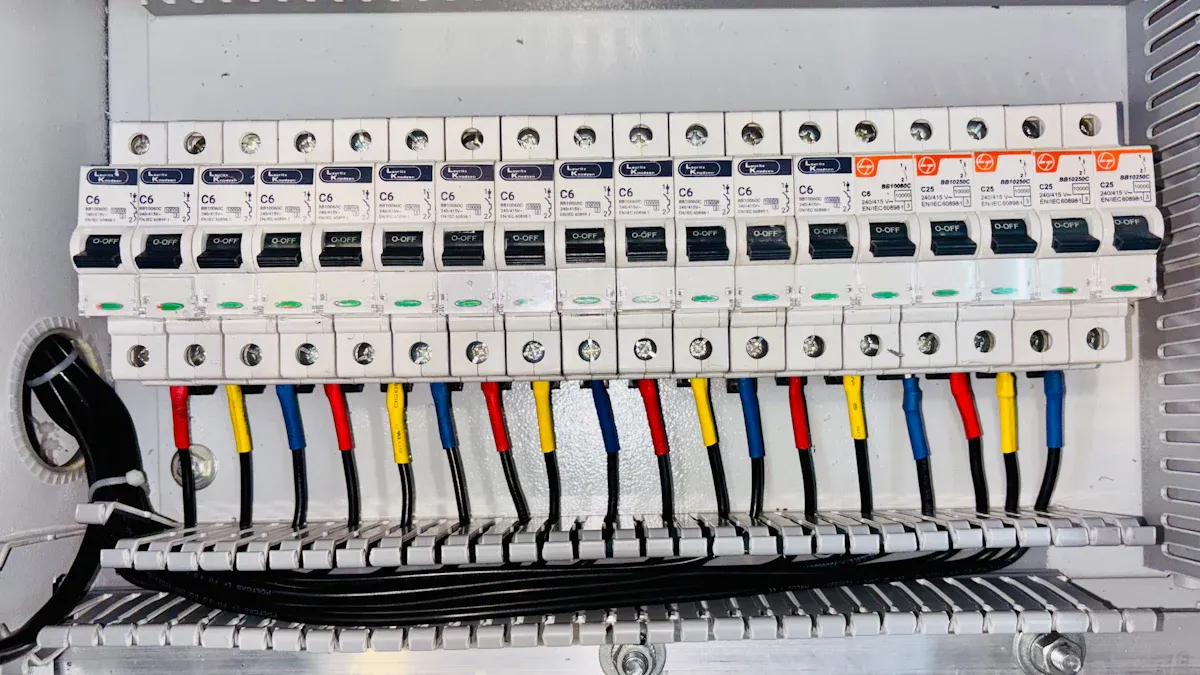
The input power connection is the entry point for electrical supply into the distribution board. This component must be designed for maximum reliability and safety. Industry best practices for input power connection design include:
Use of a dedicated ground plane with star grounding to minimize electrical noise.
Placement of at least one ground via per power pin on integrated circuits, spaced no more than 0.5 inches apart.
Calculation of trace width based on current and temperature rise to prevent overheating.
Positioning of vias close to component pins to reduce path length and impedance.
Implementation of thermal management techniques, such as thermal vias, for high-power designs.
Maintenance of continuous ground planes under signal traces for impedance matching.
These practices ensure the distribution board can handle high loads while maintaining electrical integrity and safety.
The main switch provides a manual means to disconnect the entire distribution board from the power source. Circuit breakers serve as the primary protection devices within power distribution boards. Their core function is to interrupt current flow in the event of overcurrent, preventing equipment damage and reducing fire risk. Circuit breakers also act as the main switch in many configurations, allowing for safe isolation of the electrical sub-network.
Modern circuit protection relies on advanced manufacturing. The HAIPART MCB Automatic Assembly Line automates the precise assembly of miniature circuit breakers. This technology ensures high-precision positioning and assembly of critical components, reducing human error and enhancing reliability. Standardized processes and real-time inspections guarantee consistent quality across all models, which is essential for effective circuit protection and long-term safety.
Busbars are metallic strips or bars that distribute electrical power to multiple circuits within the distribution board. The choice of material directly affects electrical performance:
Busbars are typically made from copper or aluminum, both known for excellent conductivity.
Copper busbars offer superior conductivity and are preferred for high-performance applications.
Aluminum busbars are lighter and more cost-effective, suitable for many industrial uses.
The following table summarizes standard current ratings for busbars in power distribution boards:
| WxT [mm] | Cross-section [mm²] | Weight [kg/m] | Continuous Current [A] (Tin-plated) | Continuous Current [A] (Bare) |
|---|---|---|---|---|
| 15 x 3 | 44.5 | 0.396 | 187 | 162 |
| 20 x 3 | 59.5 | 0.529 | 237 | 204 |
| 25 x 3 | 74.5 | 0.663 | 287 | 245 |
| 30 x 5 | 149 | 1.33 | 447 | 379 |
| 40 x 3 | 119 | 1.06 | 435 | 366 |
| 50 x 5 | 249 | 2.22 | 697 | 583 |
| 60 x 5 | 299 | 2.66 | 826 | 688 |
| 80 x 5 | 399 | 3.55 | 1070 | 885 |
| 100 x 5 | 499 | 4.44 | 1300 | 1080 |
| 120 x 10 | 1199 | 10.7 | 2110 | 1740 |
| 160 x 10 | 1600 | 14.2 | 2700 | 2220 |
| 200 x 10 | 2000 | 17.8 | 3290 | 2690 |
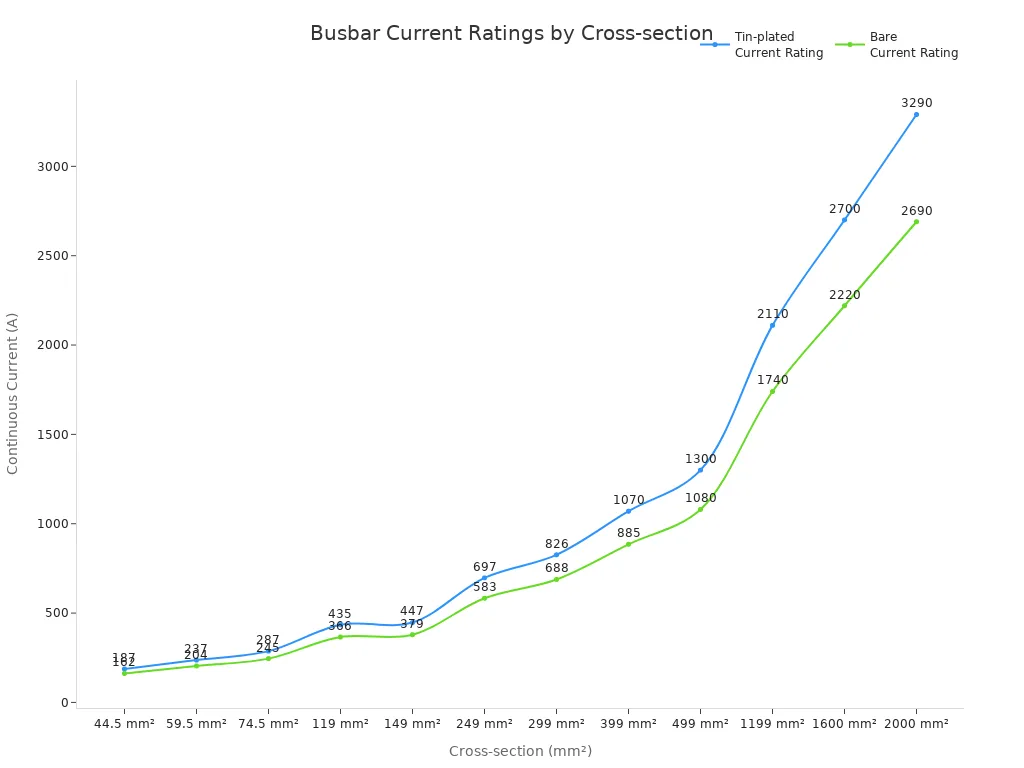
Proper busbar selection and sizing are critical for efficient power distribution and thermal management within the distribution board.
Fuses and other protective devices provide essential circuit protection by interrupting current flow during faults. They safeguard equipment and personnel from electrical hazards. The reliability of these devices directly impacts the uptime and safety of power distribution boards. Recent studies show that failure rates for protective devices can be influenced by factors such as loose terminations, breaker miscoordination, and enclosure ingress.
| Failure category | Incidents per 1,000 panel‑years | Share of unplanned downtime | Common root causes |
|---|---|---|---|
| Loose/overheated terminations | 2.0–6.0 | 30–45% | Insufficient torque, thermal cycling, vibration |
| Breaker miscoordination / nuisance trips | 1.0–3.0 | 15–25% | Poor curve coordination, ambient >40°C, harmonics |
| Enclosure ingress / corrosion | 0.5–2.5 | 10–20% | Seal failure, UV aging, coastal salt |
| Neutral–ground errors / EMI | 0.3–1.5 | 5–15% | Improper bonding, shared neutrals, VFDs |
| Labeling / wiring mistakes | 0.5–1.8 | 5–10% | As‑built drift, undocumented changes |
| Thermal derating / busbar overheating | 0.4–1.2 | 5–10% | Undersized busbars, poor ventilation |
Effective circuit protection design and regular inspection help reduce these risks and support safe operation.
Distribution points are the locations within the distribution board where power branches out to individual circuits. Optimized configuration of these points is essential for load management. Dynamic Load Management (DLM) solutions continuously monitor energy consumption and redistribute loads in real time. This prevents grid overloads and ensures efficient energy use, especially during peak demand. Power management systems provide real-time data on power conditions, helping to avoid outages and reduce energy costs. These systems use connected devices and sensors to facilitate strategic load management and support circuit protection.
Neutral and ground bars are fundamental for electrical safety in any distribution board. The neutral bar connects the neutral wires of various circuits, providing a safe return path for current during normal operation. The ground bar connects grounding conductors, offering a low-resistance path for fault currents to dissipate into the earth. This arrangement enhances protection during electrical faults and prevents electric shock.
The ground wire acts as a safety feature, directing fault current to earth and triggering circuit protection devices.
The neutral wire completes the circuit and carries current under normal conditions.
Neutral bars and ground bars are made from conductive materials and are configured to connect multiple wires securely.
| Feature | Neutral Bars | Ground Bars |
|---|---|---|
| Purpose | Connects neutral wires for safe current return | Directs fault currents to the earth |
| Color | Typically white or grey | Usually green or bare copper |
| Connection Configuration | Multiple wires in separate slots | Terminal blocks for grounding conductors |
Proper installation of neutral and ground bars is vital for maintaining safety and ensuring the effectiveness of circuit protection.
Surge protection devices (SPDs) are critical for safeguarding sensitive equipment from voltage spikes. SPDs maintain operational continuity and minimize the risk of equipment failure. In industries such as manufacturing and healthcare, SPDs prevent significant revenue loss by ensuring reliable service delivery. Power surges can cause severe damage to electronic systems, disrupt workflows, and compromise safety. SPDs mitigate the damaging effects of transient surge events, protecting sensitive equipment and supporting overall circuit protection.
Common types of SPDs include:
Type 1 SPDs: Provide external surge protection.
Type 2 SPDs: Most widely used in power distribution systems, offering primary protection.
Type 3 SPDs: Deliver precision protection for sensitive devices.
Modern distribution boards integrate advanced monitoring and control devices for real-time diagnostics and predictive maintenance. Technologies such as nrgSMART and ABB Ability™ Condition Monitoring provide detailed telemetry for each output circuit. These systems enable continuous diagnostics, optimize energy use, and reduce downtime. Circuit-level power monitoring delivers real-time data on current draw, bus current, and input voltage, supporting proactive maintenance and circuit protection.
Communication gateways connect sensors and meters to central systems for seamless data transmission.
Connected sensors collect environmental data, detecting conditions that affect equipment performance.
Intelligent power meters measure electrical parameters and communicate data in real time.
Energy management software aggregates and analyzes data, providing actionable insights for predictive maintenance.
Real-time monitoring enhances operational safety by enabling early detection of anomalies, supporting timely interventions, and optimizing maintenance schedules.
The enclosure of a distribution board protects internal components from environmental hazards and unauthorized access. Proper labeling is essential for safety, compliance, and efficient maintenance. Regulatory standards require durable, legible markings that identify each circuit and warn of electrical hazards.
| Standard | Requirement |
|---|---|
| NEC 110.21(b) | Markings must be durable enough to withstand the environment. |
| NEC 210.5(C)(1)(b) | Conductors must be permanently posted at each branch-circuit panelboard. |
| NEC 408.4(A) | Every circuit must be legibly identified for its specific purpose. |
| OSHA 1910.145(e)(2) | Signs should be easily read and concise, providing clear information. |
| OSHA 1910.335(b)(1) | Safety signs must warn employees about electrical hazards. |
| ANSI Z535.4 4.11 | A hazard symbol must be used on hazard alerting signs. |
| ANSI Z535.4 7.3 | Message panels should have black lettering on a white background or vice versa. |
| ANSI Z535.4 8.1.2 | Lettering should be a combination of upper and lower case letters. |
Tip: Proper panel labeling is crucial for emergency response and maintenance efficiency. Clear labels help first responders and electricians quickly identify and isolate circuits, preventing accidents and supporting safe troubleshooting. Regularly updating labels ensures ongoing visibility and accuracy.
For those seeking guidance on how to maintain and troubleshoot a distribution board, understanding the role of each component and the importance of accurate labeling is essential. Effective maintenance and troubleshooting practices help ensure the long-term safety and reliability of power distribution boards.
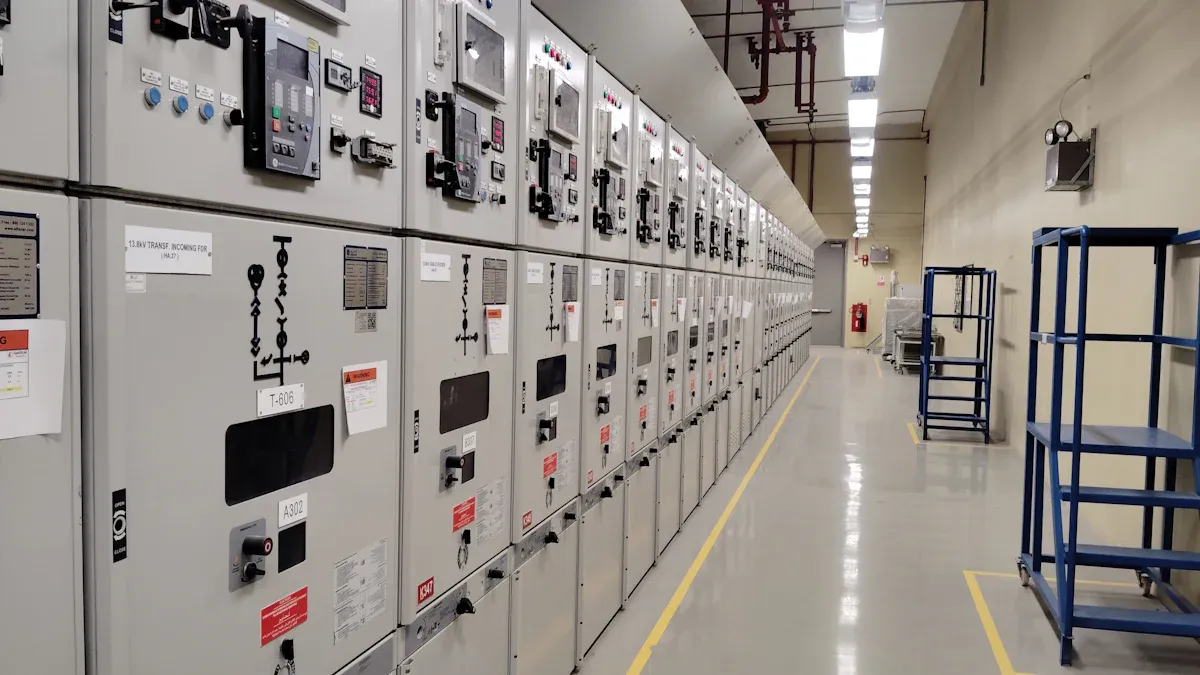
The distribution board serves as the foundation for safe and organized electrical systems in homes, offices, and commercial buildings. In residential settings, the application of power distribution boards ensures that each room or appliance receives the correct amount of power. Proper installation supports circuit protection, reducing the risk of electrical fires and equipment damage. Commercial buildings require more complex distribution board configurations to handle higher loads and multiple circuits. The table below highlights the main differences in distribution board types for various applications:
| Feature | ROW DB (Row Type) | SPN DB (Single Phase & Neutral) | TPN DB (Three Phase & Neutral) |
|---|---|---|---|
| Phase Compatibility | Single Phase | Single Phase | Three Phase |
| Typical Application | Large homes, villas, light commercial spaces | Apartments, small homes, small offices | Commercial buildings, workshops, data centers |
| Load Capacity | Medium to High | Low to Medium | High to Very High |
| Key Advantage | Organization and scalability | Simplicity and speed of installation | Safely manages high-power, three-phase loads |
Distribution board selection depends on the application, load requirements, and future expansion plans. Proper protection devices, such as miniature circuit breakers, must be included for every installation.
Industrial power distribution requires robust distribution board designs to manage high-capacity loads and ensure continuous operation. The application of power distribution boards in factories, data centers, and manufacturing plants involves advanced protection features and modular installation options. The following table outlines the main types of distribution boards used in industrial power distribution:
| Type of Distribution Board | Capacity Features | Safety Features |
|---|---|---|
| Main Breaker Panel | High amperage rating | Main circuit breaker for total disconnection |
| Sub-panel | Splits supply into smaller circuits | No separate disconnects |
| Molded Case Circuit Breaker | Versatile, handles large currents | Automatic overcurrent protection |
| Isolators | Manual control for maintenance | Safe repairs and isolation |
Industrial power distribution boards must support reliable protection, quick isolation, and flexible installation. These features help prevent downtime and protect both equipment and personnel.
The application of power distribution boards directly improves safety and operational efficiency. Modern distribution board designs with advanced protection components reduce the risk of faults and electrical hazards. Statistical data shows that the use of distribution boards increases forecast success rates by 20% and boosts distribution efficiency by 25%. Analytical latency decreases by 35%, which means faster response to electrical issues. Proper installation and regular inspection of distribution boards ensure that protection devices function as intended. This approach supports safe operation in every application, from homes to industrial power distribution systems.
Tip: Always verify that the distribution board matches the application and includes all necessary protection features for optimal safety and performance.
Understanding the essential components of power distribution boards is critical for effective protection and safety compliance. Main switches, circuit breakers, and busbars each play a unique role in protection. Fuses and surge devices deliver additional layers of protection. Neutral and ground bars support protection by ensuring safe current paths. Regular inspection and quality manufacturing enhance protection and maintain power management efficiency. Recognizing these elements helps users achieve reliable operation and meet safety compliance standards.
A circuit breaker can be reset after tripping, while a fuse must be replaced once blown. Both protect circuits from overcurrent, but circuit breakers offer easier maintenance and improved reliability.
Experts recommend inspecting power distribution boards at least once a year. Regular checks help identify loose connections, overheating, and signs of wear, ensuring continued safety and optimal performance.
Surge protection devices reduce the risk of damage from voltage spikes. However, they cannot prevent issues caused by sustained overvoltage or direct lightning strikes. Proper grounding and layered protection improve overall safety.
Automated assembly lines, such as the HAIPART MCB Automatic Assembly Line, ensure precise component placement and consistent quality. This process minimizes human error, increases reliability, and supports large-scale production with strict quality control.


