
Views: 0 Author: Site Editor Publish Time: 2025-12-26 Origin: Site
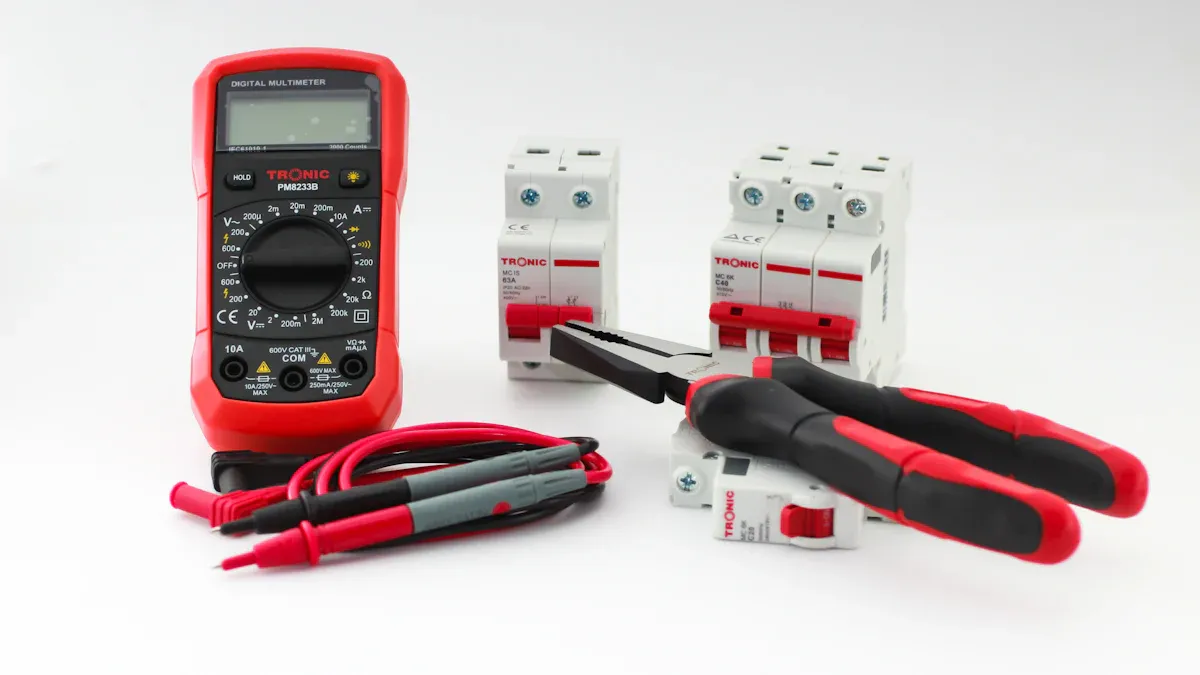
To pick the right MCB curve, check what kind of load your equipment has and how much inrush current happens when it starts. If you match the MCB curve to these things, you can stop the MCB from tripping for no reason and keep your system safe.
Choosing the right curve helps stop damage to equipment and makes things work better.
You should always pick an MCB that can take the biggest inrush current in your circuit.
Haipart’s miniature circuit breaker gives you good protection for many uses.
Pick the right MCB curve (B, C, or D) by looking at your equipment’s inrush current. This helps stop the MCB from turning off when it should not.
Type B curves are good for most home circuits. Type C is better for motors. Type D is best for big machines.
Always look at the inrush current numbers in your device’s datasheet before you pick an MCB.
Go through each step to match your load to the right MCB curve. This keeps things safe and working well.
Use a checklist to make sure your MCB has all the right features for your project.
MCB curves have labels like B, C, or D. These labels show how fast the MCB reacts to a sudden jump in current. Each curve works best with a certain load and inrush. Picking the right curve helps stop unwanted trips and keeps your circuit safe. MCB curves help you choose the right MCB for your needs.
Tripping means the MCB shuts off power if there is too much current. Each MCB curve has its own tripping range. This range shows how many times above normal current the MCB will trip. You can see the main differences in the table below:
| Type | Tripping Characteristics | Response Time | Applications |
|---|---|---|---|
| B | 3 to 5 times rated current | Moderately fast | General household circuits, residential appliances, light commercial use |
| C | 5 to 10 times rated current | Slower than Type B | Motors, pumps, transformers, power tools |
| D | 10 to 20 times rated current | Slowest among types | Heavy industrial applications, equipment with high inrush currents |
When you pick an MCB, match the curve to the inrush of your load. For example, motors have high inrush, so you need a D curve to stop unwanted trips. If you pick the wrong curve, the MCB might trip too early or not protect your stuff.
Always match the MCB curve to what you are using it for. Here is a quick guide:
Type B: Good for homes and small businesses, like lights and heaters.
Type C: Works for bigger loads, like HVAC and lighting in businesses.
Type D: Needed for heavy machines with big inrush, like motors and battery chargers.
Tip: Always check the inrush current before picking an MCB. This step helps you avoid trouble and keeps your protection strong.
Industry rules, like IEC 60898-1 for homes and IEC 60947-2 for industry, help you pick the right MCB curve. These rules keep your system safe and working well.
Some electrical devices use a lot more current when they first turn on. This sudden jump is called inrush. For example, a motor can use four to eight times more current at startup. The motor needs extra power to begin moving. LED drivers and transformers also have inrush when they start. Inrush can make the voltage drop in your circuit. This drop can bother other equipment close by.
A 150W LED driver can have an inrush current of 130A, but it only lasts a short time.
A 220W LED driver might reach 80A for about one millisecond.
Transformers get a big inrush when you turn them on, but it only lasts a few cycles.
Induction motors have high inrush at the start, but it gets lower as the motor speeds up.
You must think about inrush when you pick an MCB. If you do not, the breaker might trip even if nothing is wrong. The right tripping curve lets your system handle high inrush without losing safety. For example, motors and welders need an MCB that can handle these high peaks.
Tip: Always look at the peak current and pulse width in the datasheet. This helps you pick the right MCB and stop unwanted trips.
The table below shows how different loads and their inrush multipliers change which MCB curve you should use:
| Load Type | Typical Inrush Multiplier (×In of steady current) | Recommended MCB Curve |
|---|---|---|
| Incandescent/Resistive heater | 1.0–1.1 | B |
| Small SMPS (phone chargers, routers) | 1.2–2.5 | B or C |
| LED drivers (domestic fixtures) | 3–8 | C |
| Refrigerator/Freezer compressors | 6–12 | C or D |
| Heat pump/AC compressors | 6–12 (sometimes 14) | C or D |
| Single-phase induction motors (tools) | 6–12 | D |
| Transformers (magnetizing inrush) | 8–20 | D |
| Welders/Inverters | 10–20 | D |

Different devices have their own inrush patterns. You should know these before you pick an MCB:
Motors have high inrush when they start, and the breaker can trip if you pick the wrong type.
Transformers make a big inrush when you turn them on, but it goes away fast.
LED drivers can make sharp, quick inrush bursts, especially if you turn on many at once.
To stop nuisance trips, follow these tips:
Pick the right MCB tripping curve for your load.
Check the datasheet for inrush information.
Do not put too many high-inrush loads on one circuit.
Turn on devices one after another if you can.
If you know about inrush and match your MCB to your device, your system will stay safe and work well.

Start by learning about your load and its inrush. This helps you stop unwanted trips and keeps things safe. Use these steps to pick the right curve:
Find out the rated current for your load. Look at the wire size and temperature.
Figure out or guess the inrush current. This helps you choose the best curve.
Make sure the short-circuit current is at least 1.25 times more than the curve limit.
Change your choice if the box gets hotter than 35°C.
Test your system at the site and adjust your pick if needed.
Tip: Always read the datasheet for inrush and tripping info before you choose an MCB.
Match your load to the right curve by checking the equipment type and inrush. The table below shows which curve fits each job and trip need:
| MCB Type | Magnetic Trip Range (x Rated Current) | Suitable Applications |
|---|---|---|
| Type B curve | 3-5 | Lighting circuits, heating elements, control systems |
| Type C curve | 5-10 | Mixed loads, standard motors, pumps, small motors, fans |
| Type D curve | 10-20 | Heavy-duty applications, large motors, transformers, welding equipment, generators |
Type B curve works best for lights and electronics. Type C curve is good for most motors and mixed loads. Type D curve is for big machines with high inrush.
Here are some easy examples:
Use a type B curve for control circuits or PLC power. This stops trips from small inrush.
Pick a type C curve for pumps, conveyors, or HVAC fans. This curve handles normal motor inrush.
Choose a type D curve for big generators or transformers. This curve deals with high inrush at startup.
Haipart’s Miniature Circuit Breaker supports all these curves. You can use it in homes, offices, factories, and special places. It is small and easy to install, so it fits many jobs.
Here is a simple chart to help you match your load to the right curve:
| Curve Type | Tripping Current (times rated) | Tripping Time (seconds) | Applications |
|---|---|---|---|
| B | 3 to 5 | 0.04 to 13 | Homes, lighting, resistive loads |
| C | 5 to 10 | 0.04 to 5 | Offices, small motors, transformers |
| D | 10 to 20 | 0.04 to 3 | Factories, heavy motors, machinery |
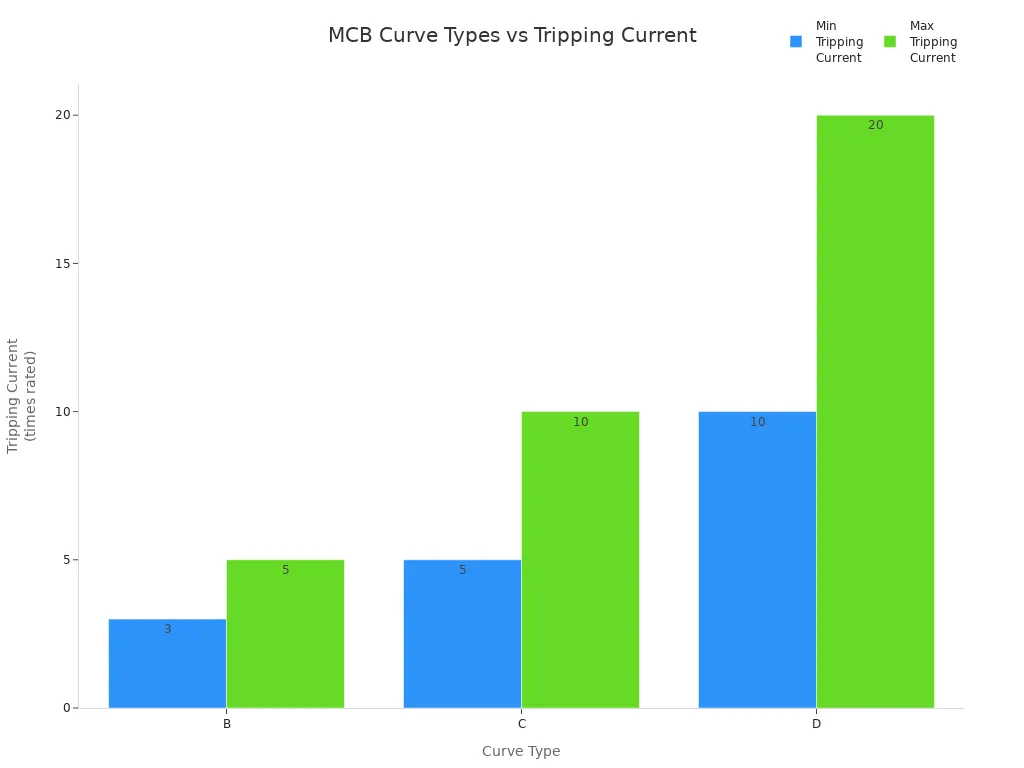
Note: Always pick the curve that matches the highest inrush you expect.
Some places need extra care when picking an MCB. Hot weather can lower how much current your breaker can handle. If your box gets hot, pick a higher-rated MCB. Cold weather can make moving parts work slower.
Wet air and water can cause rust inside the breaker. This can make it break or short-circuit. Always check for dust, water, or heat signs when you do maintenance.
For big projects, check and test your MCB often. Use thermal cameras to find hot spots. Change breakers after 10–20 years or after many faults.
Haipart’s Miniature Circuit Breaker meets IEC rules and works in many places. You can use it for homes, factories, or special jobs. The breaker gives overload and short-circuit protection, is easy to put in, and has options for every need.
Tip: Do not make mistakes like overloading, picking the wrong size, or ignoring breaking power. Always check ratings and get experts to install.
If you follow these steps, your MCB choice will fit your load, place, and safety needs. This keeps your system safe and working well.
If you need to pick the right tripping curve, a quick guide can help you save time and avoid errors. Always match the curve to your load and inrush needs. This part gives you a simple table and a checklist to help you choose.
Use this table to compare tripping curves and find the best one for your circuit. Each curve has its own tripping range and use. Check the examples to see which fits your system.
| MCB Type | Characteristics | Applications | Use Case Example |
|---|---|---|---|
| Type B | Trips at 3 to 5 times rated current; fast response | Homes, lighting, small appliances | Protecting lighting circuits in a house |
| Type C | Trips at 5 to 10 times rated current; medium response | Offices, motors, mixed loads | Protecting small motors in an office building |
| Type D | Trips at 10 to 20 times rated current; slowest response | Factories, heavy motors, transformers | Protecting large industrial machines |
| Type K | Trips at 8 to 12 times rated current; for inductive loads | Industries with high inrush | Protecting heavy-duty motors and transformers |
Note: Always check the inrush and tripping needs before you pick a curve.
Before you finish picking, use this checklist to make sure your MCB covers all the important things. This helps keep your circuit safe.
Know what you need. Is it for a home, business, or factory?
Match the current rating to your circuit load.
Check the tripping curves for overload and inrush protection.
Make sure the breaking capacity is higher than the biggest fault current.
Confirm the voltage rating fits your system.
Pick a trusted manufacturer with good quality checks.
| Essential Factors | Description |
|---|---|
| Breaking Capacity | Can the MCB handle the biggest fault current in your circuit? |
| Rated Current | Does the MCB match the load size for your application? |
| Voltage Specifications | Will the MCB work safely at your system voltage? |
| Quality Control | Has the MCB passed strict manufacturing checks? |
| Manufacturer Reputation | Do you trust the brand for your project? |
Tip: Go over this checklist every time you pick an MCB. This helps you avoid mistakes and keeps your system safe.
You can make your project better by using a simple process to pick MCB curves. The table below helps you see which curve works for each load and trip need:
| MCB Curve | Application | Tripping Current Range |
|---|---|---|
| B Curve | Lighting loads, residential use | 3 to 5 times rated current |
| C Curve | Elevators, motors, general commercial load | 5 to 10 times rated current |
| D Curve | Heavy machinery or transformers | 10 to 20 times rated current |
Inrush current is often much higher than normal current. For example, motors and transformers can use up to 15 times their rated current when they start. You must match the MCB curve to your load and inrush to keep things safe.
Always use the quick table and checklist for every project. Haipart’s Miniature Circuit Breaker gives strong protection for any job.
An MCB curve shows how quickly your circuit breaker trips when current rises. You use this to match the breaker to your equipment’s needs. Picking the right curve keeps your system safe and stops unwanted power cuts.
You check your device’s inrush current and load type. Use a B curve for lights, a C curve for small motors, and a D curve for heavy machines.
Tip: Always read your equipment’s datasheet for inrush details.
No. You should not use a D curve for all loads. D curves work best for heavy machines with high inrush. For lights or small devices, use B or C curves. This helps you avoid safety risks and nuisance trips.
You get fast, reliable protection for many uses. Haipart’s MCB works in homes, offices, and factories. It handles overloads and short circuits. You can trust its quality and easy installation.
If you pick the wrong curve, your breaker might trip too often or not protect your equipment.
Too sensitive: Power cuts happen for no reason.
Not sensitive enough: Equipment may get damaged.
Always match the curve to your load.


