

Views: 0 Author: Site Editor Publish Time: 2026-01-26 Origin: Site


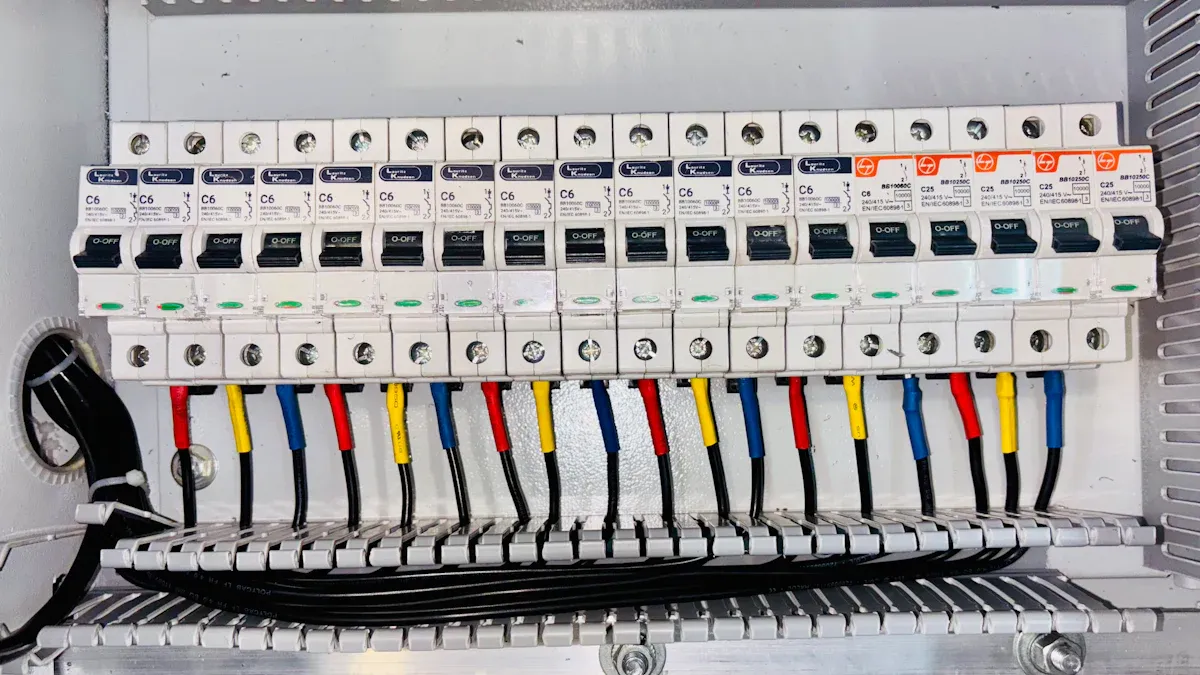
Selecting the right circuit breaker for circuit breaker distribution equipment in 2026 requires a clear understanding of the key differences between mccb and iccb. The global market shows strong growth in mccb adoption, especially in commercial and industrial sectors, due to modernization and automation. International standards now prioritize safety, efficiency, and advanced smart features, making innovation essential. Trusted manufacturers like HAIPART set the benchmark for quality and compliance. This is a comprehensive guide to molded case circuit breakers, offering practical insights for confident decision-making.
Understand the key differences between MCCB and ICCB to make informed decisions for your electrical systems.
MCCBs are ideal for commercial and light industrial applications due to their compact design and moderate cost.
ICCBs excel in heavy-duty environments, offering higher interrupting capacities and advanced protection features.
Consider the maintenance strategies: MCCBs follow a replace-and-forget approach, while ICCBs allow for easier servicing and reduced downtime.
Stay updated on compliance standards to ensure your circuit breakers meet safety and performance requirements.
Evaluate the total ownership cost, including initial investment and maintenance, to choose the best option for your project.
Consult with manufacturers like HAIPART for expert guidance and tailored solutions that fit your specific needs.
Incorporate smart features in your circuit breakers to enhance safety, efficiency, and future-proofing for evolving technologies.
Selecting the right circuit breaker often starts with a side-by-side comparison of core attributes. The table below highlights the main differences between molded case circuit breakers (MCCB) and insulated case circuit breakers (ICCB). This overview helps professionals and project managers quickly identify which device aligns with their system requirements.
| Feature | MCCB (Molded Case Circuit Breaker) | ICCB (Insulated Case Circuit Breaker) |
|---|---|---|
| Construction | Molded thermoset or thermoplastic case | Insulated case with modular design |
| Interrupting Capacity | Medium to high | Very high |
| Voltage Range | Up to 1,000V AC | Up to 1,150V AC |
| Current Range | Up to 2,500A | Up to 6,300A |
| Protection Mechanism | Thermal-magnetic, electronic | Advanced electronic, adjustable |
| Application | Commercial, light industrial | Heavy industrial, critical systems |
| Maintenance | Replace-and-forget | Maintain-and-reuse |
| Compliance | IEC 60947-2, GB 10963.1, SGS, TÜV | IEC 60947-2, advanced certifications |
| Size | Compact | Larger, modular |
| Cost | Moderate | Higher initial investment |
Tip: Use this table as a reference when evaluating project needs or discussing options with suppliers.
Performance remains a critical factor in circuit breaker selection. MCCB offers reliable protection for most commercial and industrial applications. It handles overloads and short circuits with a robust thermal-magnetic or electronic trip system. The HAIPART MCCB component, for example, uses flame-retardant PA66 and high-quality bimetallic strips to ensure consistent operation and safety.
ICCB stands out in environments that demand higher interrupting capacities and advanced protection features. It supports larger current ratings and often includes adjustable electronic trip units. This makes ICCB suitable for heavy-duty industrial plants, data centers, and infrastructure projects where downtime is not an option.
MCCB excels in compact installations and standard distribution panels.
ICCB dominates in high-demand, mission-critical systems.
Both types comply with international standards, but ICCB may offer enhanced certifications and modularity.
When choosing between these two, consider the scale of your electrical system, the required protection level, and long-term maintenance strategies. Consulting with manufacturers like HAIPART ensures that your selection meets both current and future requirements.
Molded-case circuit breakers feature a compact, enclosed design. Manufacturers use molded insulating materials to house the internal components, which include trip units and arc extinguishing devices. The molded-case construction provides robust protection against environmental factors and electrical faults. HAIPART’s MCCB component exemplifies this approach, utilizing flame-retardant PA66 for handles and high-quality bimetallic strips for overload protection. The replace-and-forget philosophy makes MCCBs ideal for installations where minimal maintenance is preferred.
Insulated-case breakers share similarities with low-voltage power circuit breakers (LVPCBs) but are tested to MCCB specifications. The insulated-case design allows for modularity and partial field maintainability. ICCBs are often available in drawout switchgear configurations, which facilitate easier servicing and replacement. These breakers suit environments where system flexibility and rapid maintenance are critical.
ICCBs use advanced heat-resistant materials to prevent internal electrical arcs and enhance safety.
MCCBs rely on robust molded insulation to protect overcurrent protective devices and maintain system integrity.
| Feature | MCCB | ICCB |
|---|---|---|
| Construction | Enclosed in a molded case of insulating material | Shares characteristics with LVPCBs, tested to MCCB specs |
| Field Maintainability | Not field maintainable | Partial field maintainability |
| Applications | Used in panelboards, switchboards, and as stand-alone disconnects | Drawout switchgear availability, similar to LVPCBs |
Note: The notable differences in construction and maintainability directly impact long-term reliability and service strategies.
The ability of a circuit breaker to interrupt fault currents is a key performance metric. MCCBs typically offer ultimate breaking capacities ranging from 25 to 100kA, suitable for most commercial and industrial applications. ICCBs provide higher interrupting capacities, reaching up to 150kA, which makes them suitable for heavy-duty and mission-critical systems.
| Parameter | MCCB | ICCB |
|---|---|---|
| Rated current (In) | 10–2500A | 800–5000A |
| Rated operational voltage (Ue) | AC 690V / DC 1000V | AC 1000V / DC 1200V |
| Ultimate breaking capacity (Icu) | 25–100kA | 65–150kA |
| Service breaking capacity (Ics) | 50–75% of Icu | ~100% of Icu |
MCCBs cover a broad range of voltages and currents, making them versatile overcurrent protective devices for many installations. ICCBs extend these ranges, supporting higher voltages and currents for demanding environments.
MCCBs utilize electromechanical trip units that combine thermal and magnetic protection. This ensures reliable response to both overloads and short circuits.
ICCBs incorporate stored energy mechanisms and may feature advanced trip devices, offering precise and adjustable protection for complex systems.
The notable differences in protection mechanisms reflect the evolution of circuit breaker technology in 2026, with insulated-case breakers providing enhanced safety and flexibility.
Molded-case circuit breakers are commonly installed in panelboards, switchboards, and as stand-alone disconnects. Their compact size and straightforward installation make them a preferred choice for commercial buildings, light industrial facilities, and infrastructure projects.
Insulated-case breakers excel in high-demand environments such as data centers, manufacturing plants, and large-scale infrastructure. Their modularity and high interrupting capacity support critical systems where downtime must be minimized.
Commercial office buildings rely on MCCBs for reliable overcurrent protection and ease of replacement.
Heavy industrial sites and mission-critical facilities deploy ICCBs to safeguard complex electrical networks and ensure rapid maintenance.
When selecting overcurrent protective devices, consider the specific requirements of your application and the advantages offered by each circuit breaker type.
In 2026, safety standards for circuit breakers have advanced to address new technologies and evolving application demands. Regulatory bodies now enforce stricter guidelines to ensure reliable operation under both standard and extreme conditions. The latest updates include:
Enhanced requirements for performance during overload and fault scenarios.
Integration of advanced testing protocols to evaluate circuit breaker response in real-world environments.
Focus on durability and resilience, reflecting the needs of modern electrical infrastructure.
These updates drive manufacturers to adopt innovative materials and production techniques. HAIPART, for example, implements automated quality checks and advanced insulation materials to meet and exceed these evolving standards.
International certifications play a critical role in product selection. They validate that a circuit breaker meets global safety and performance benchmarks. The table below outlines the most relevant certifications for MCCB and ICCB in 2026 and their impact:
| Certification | Relevance | Impact on Product Selection |
|---|---|---|
| IEC 60947 | Global | Ensures safety and performance standards in Europe, Asia, and the Americas |
| GB 10963.1 | China | Required for compliance in Chinese markets |
| SGS | Global | Independent verification of quality and safety |
| TÜV | Europe | Recognized for rigorous testing and certification processes |
Manufacturers like HAIPART prioritize these certifications, ensuring their MCCB components are suitable for international projects and meet the highest safety expectations.
Modern MCCBs and ICCBs incorporate advanced safety features to comply with 2026 standards. Many commercial MCCBs now include phase-loss sensitivity. The electronic trip unit monitors current across all three poles. If it detects a significant imbalance—such as a missing or failed phase—the breaker trips immediately. This feature prevents motors from operating under single-phase conditions, which can cause severe damage within seconds. Enhanced arc-extinguishing devices and flame-retardant materials further improve safety, reducing the risk of electrical fires and equipment failure.
The initial investment for MCCBs and ICCBs varies significantly. MCCBs offer a cost-effective solution for most commercial and light industrial applications. For example, a typical 630A MCCB ranges from $800 to $1,500. ICCBs, designed for high-demand and mission-critical systems, command a higher price, with 630A models ranging from $7,000 to $12,000. This difference reflects the advanced features, modularity, and higher interrupting capacities of ICCBs.
Maintenance strategies differ between MCCB and ICCB installations. MCCBs follow a replace-and-forget philosophy. When a fault occurs or the device reaches the end of its service life, the entire unit is replaced. This approach minimizes downtime but may result in unplanned outages lasting 8 to 24 hours. In contrast, ICCBs are designed for maintain-and-reuse. Technicians can replace trip units or contacts without removing the entire breaker, allowing for scheduled maintenance and reducing downtime to as little as two hours.
Total ownership cost includes initial purchase, maintenance, and downtime expenses. The table below compares key factors:
| Feature | MCCB Cost | ICCB Cost | Lifecycle Serviceability |
|---|---|---|---|
| Typical Cost (630A) | $800-$1,500 | $7,000-$12,000 | Replace entire unit |
| Lifecycle Maintenance | One full replacement | Replace trip unit or contacts | Significant maintainability advantage |
| Maintenance Downtime Cost | Unplanned outage (8-24 hours) | Scheduled maintenance (2 hours) |
Project managers must weigh these factors when selecting a circuit breaker. MCCBs provide lower upfront costs and simple replacement, while ICCBs offer long-term maintainability and reduced downtime, which can be crucial for critical infrastructure.
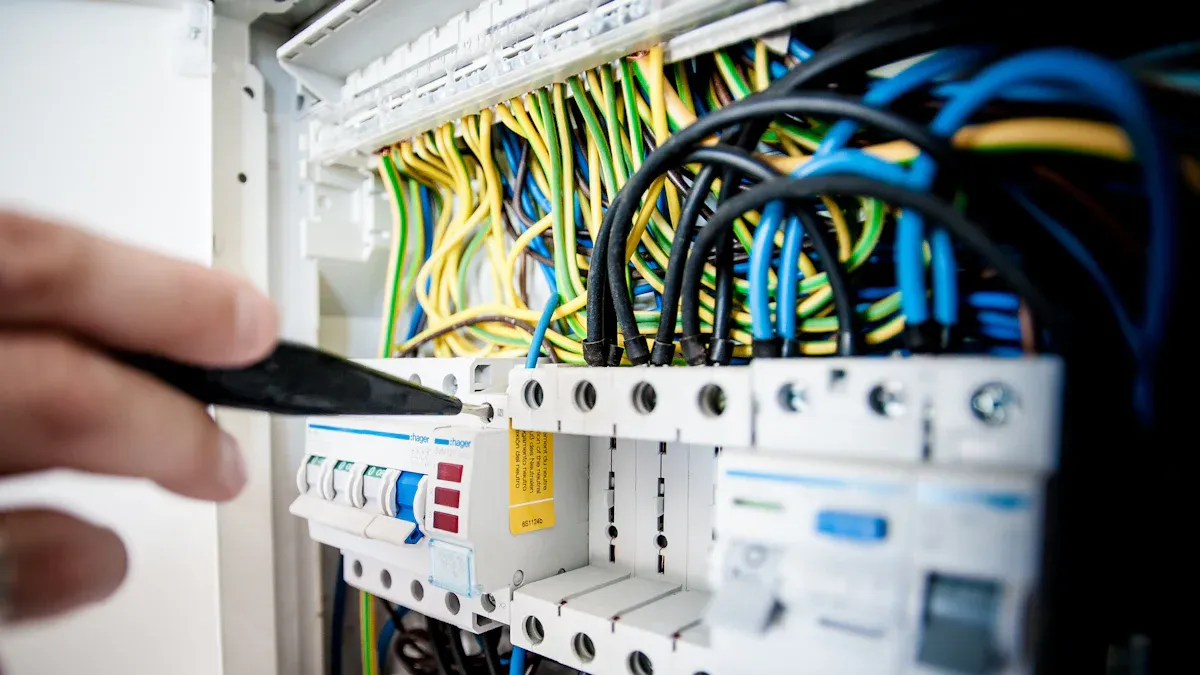
Project requirements form the foundation of circuit breaker selection. Engineers must evaluate the electrical load profile and the operational environment before making a decision. The following factors influence the choice between MCCB and ICCB:
The operational environment determines insulation ratings. Facilities exposed to temperature extremes, humidity, or dust require breakers with enhanced protection.
Tripping characteristics affect how quickly the breaker responds to overloads and short circuits. Fast response reduces downtime and protects sensitive equipment.
Breaking capacity is critical for installations with high inrush currents. The breaker must handle fault conditions without failure.
A thorough assessment of these elements ensures the selected device aligns with the demands of the installation. For example, HAIPART’s MCCB components offer robust insulation and reliable tripping mechanisms, making them suitable for a wide range of environments.
Compliance with current regulations is a non-negotiable criterion in 2026. Project managers must verify that all breakers meet the latest standards and certification requirements. The table below summarizes essential compliance considerations:
| Compliance Requirement | Description |
|---|---|
| Current Ratings | Breakers must meet specific current ratings as per local regulations. |
| Earth Leakage Protection Standards | Devices must comply with earth leakage protection standards. |
| Regular Updates in Regulations | Selection must consider the latest regulatory updates to ensure safety. |
Manufacturers like HAIPART ensure their products meet international standards, including IEC 60947-2, GB 10963.1, SGS, and TÜV certifications. This guarantees compatibility with global projects and provides peace of mind regarding safety and performance.
Modern electrical systems must adapt to future growth. Scalability is a key consideration during selection. Project planners should choose breakers that can accommodate increased loads or system expansions. MCCBs offer flexibility for standard upgrades, while ICCBs support higher current ratings and advanced protection for large-scale expansions.
Modularity enhances system flexibility and simplifies maintenance. ICCBs often feature modular designs, allowing for easy replacement of trip units or contacts. This reduces downtime and supports scheduled maintenance. MCCBs, such as those from HAIPART, provide compact solutions with reliable performance, ideal for installations where space and simplicity are priorities.
When evaluating breaker solutions, consider manufacturers that offer OEM/ODM services and customization. HAIPART provides tailored options, including custom packaging and product design, ensuring the breaker fits the unique needs of each project.
The regulatory landscape continues to evolve. New standards emphasize safety, energy efficiency, and digital integration. Project managers must stay informed about these shifts to ensure ongoing compliance. Regular updates in regulations may affect breaker selection, especially for international projects.
Technological advancements drive the adoption of smart features in circuit breakers. The table below compares smart capabilities in MCCB and ICCB:
| Feature | MCCB | ICCB |
|---|---|---|
| Adjustable Trip Settings | Some options available | Highly customizable with advanced settings |
| Fault Condition Protection | Standard protection | Protection for diverse fault conditions |
| Remote Monitoring and Control | Limited options | Options available for remote management |
| Customization | Fewer options compared to ICCB | Supports complex protection strategies |
| Future Trends | Basic automation expected | Integration of IoT for real-time monitoring |
Industry trends show a shift toward smart and digital breakers. These devices support energy management, remote monitoring, and predictive maintenance. The adoption of Industrial IoT and smart grid initiatives is increasing. Selecting breakers with these features ensures the system remains relevant and efficient in the years ahead.
Tip: Always match breaker type to project requirements, considering up-to-date standards and emerging trends. Consult with manufacturers like HAIPART for expert guidance and access to the latest OEM/ODM customization services.
A comprehensive guide to molded case circuit breakers begins with a clear assessment of the application. Project managers and engineers must identify the operational environment, load profile, and system requirements. This process ensures the selected device aligns with the actual needs of the installation. Application assessment improves accuracy by leveraging condition monitoring and data analytics. Advanced techniques, such as signal decomposition and machine learning, help detect performance degradations early. Integrating data from multiple sensors enhances fault detection and maintenance planning. These advancements reduce downtime and prevent failures, especially in high-voltage environments.
Key steps for application assessment include:
Reviewing the electrical load and its variability.
Considering environmental factors such as temperature, humidity, and dust.
Evaluating the criticality of the system and the consequences of downtime.
Ensuring compliance with current NEC standards and local codes.
Understanding permit requirements and inspection protocols, including updates like expanded arc fault protection and ground fault requirements.
A comprehensive guide to molded case circuit breakers emphasizes that a thorough application assessment forms the foundation for reliable and safe system operation.
Matching the capabilities of the breaker to project requirements is essential for optimal performance. The following criteria should be evaluated:
Voltage rating: Must match the system voltage to avoid failure risks.
Current rating: Should accommodate the maximum expected load.
Interrupting capacity: Needs to exceed the available fault current for safety.
Frequency: Must align with the system’s operational frequency.
Tripping current level adjustment ranges: Allows for customization based on protection needs.
Environmental resistance: Ensures durability in harsh conditions.
Number of poles: Should correspond to the system configuration.
Testing and maintenance: Consider ease of access and serviceability.
Setup: Evaluate installation complexity and space requirements.
The table below summarizes how to match breaker types to applications:
| Breaker Type | Best Application | Key Features |
|---|---|---|
| Molded Case (MCCB) | General distribution | Cost-effective, wide range |
| Insulated Case (ICCB) | Heavy industrial | Higher ratings, better coordination |
A comprehensive guide to molded case circuit breakers recommends using these criteria to ensure the selected device delivers both safety and efficiency.
Evaluating value involves more than just comparing initial costs. Decision-makers must consider total ownership cost, including maintenance, downtime, and long-term reliability. Performance indices for circuit breakers can be assessed using probability distributions, and continuous improvement is possible through Bayesian updating with new data. This approach supports predictive maintenance and optimizes lifecycle costs.
Key points for value evaluation:
Compare upfront costs with expected maintenance expenses.
Assess downtime risks and the impact on operations.
Review certification and compliance to avoid regulatory penalties.
Consider the benefits of advanced features, such as remote monitoring or modularity.
Tip: A comprehensive guide to molded case circuit breakers encourages a holistic view of value, balancing cost, safety, and future-proofing for the best project outcomes.
Selecting the right molded case circuit breaker for a project often requires more than technical specifications. Complex electrical systems present unique challenges that standard guidelines may not address. In these situations, consulting with industry experts becomes essential.
Electrical experts bring specialized knowledge to the table. They understand the intricacies of short-circuit protection, load flow analysis, and coordination studies. Their experience allows them to identify risks that may not be obvious during initial planning. For example, an expert can assess whether a system requires advanced arc-extinguishing features or enhanced insulation based on the operational environment.
The following table summarizes the main benefits of consulting experts during the selection process:
| Benefit | Description |
|---|---|
| Specialized Knowledge | Experts possess in-depth knowledge in areas such as short-circuit protection and load flow studies, ensuring accurate assessments and recommendations. |
| Tailored Solutions | They provide customized solutions that enhance safety and reliability, addressing the unique needs of complex projects. |
| Compliance Assurance | Consulting experts helps ensure that all solutions meet industry standards and regulations, reducing the risk of non-compliance. |
Project managers and engineers gain significant advantages by involving experts early in the decision-making process. Customized solutions often result from a thorough review of project requirements. Experts can recommend specific breaker models, trip unit settings, and installation practices that align with both operational needs and regulatory demands.
Tip: Early expert involvement can prevent costly mistakes and reduce downtime. It also streamlines the approval process with inspectors and regulatory bodies.
Manufacturers like HAIPART offer direct access to technical consultants who understand the latest standards and product innovations. Their teams can guide clients through OEM and ODM customization options, ensuring the selected MCCB or ICCB fits the project’s unique requirements. This partnership approach supports long-term reliability and safety.
In addition, expert consultation helps organizations stay ahead of regulatory changes. Electrical codes and standards evolve rapidly. Experts monitor these updates and advise on necessary adjustments, keeping projects compliant and future-ready.
When selecting molded case circuit breakers, do not underestimate the value of professional guidance. Expert input transforms a routine purchase into a strategic investment, protecting both assets and personnel. For critical infrastructure, industrial plants, or any project where safety and uptime matter, consulting with trusted professionals like those at HAIPART ensures the best possible outcome.
MCCB and ICCB differ in construction, ratings, and maintenance strategies. These differences shape selection for industrial, commercial, and future-ready projects. Use the decision checklist to define goals, identify uncertainties, and develop scenarios for each application:
Define your planning goal
Identify top drivers and uncertainties
Develop scenarios and response plans
Manufacturer reputation matters. Consider trusted brands like HAIPART for quality and compliance.
| Essential Factors | Description |
|---|---|
| Manufacturer Reputation | Do you trust the brand for your project? |
MCCB uses a molded case for insulation and suits standard applications. ICCB features an insulated case with higher ratings and modularity for heavy-duty systems. Selection depends on system size, required protection, and maintenance strategy.
Assess your load, environment, and compliance needs. Match breaker ratings to your system. Consult with experts or manufacturers like HAIPART for tailored solutions. Review certifications and future expansion plans.
Yes. HAIPART MCCB components comply with IEC 60947-2, GB 10963.1, SGS, and TÜV standards. These certifications ensure suitability for global projects and adherence to strict safety requirements.
MCCBs follow a replace-and-forget approach. When a fault occurs or the device reaches end-of-life, replace the entire unit. Routine inspections for visible damage or wear are recommended.
HAIPART offers OEM and ODM services. You can request custom packaging, product design, or specific technical features. This ensures the breaker fits your unique project requirements.
Modern MCCBs may include adjustable trip settings, phase-loss protection, and basic remote monitoring. Advanced models support integration with energy management systems for improved safety and efficiency.
A reputable manufacturer ensures product quality, compliance, and support. Brands like HAIPART invest in advanced materials, automated production, and rigorous testing. This reduces risk and enhances long-term reliability.


